
Fire cider tastes like a punchy, savory-sweet vinegar with a serious kick — horseradish, ginger, garlic, and citrus all steeped together until the liquid is sharp, warming, and ridiculously alive. It’s the kind of thing you splash into salad dressing or a Bloody Mary when plain vinegar just won’t cut it.
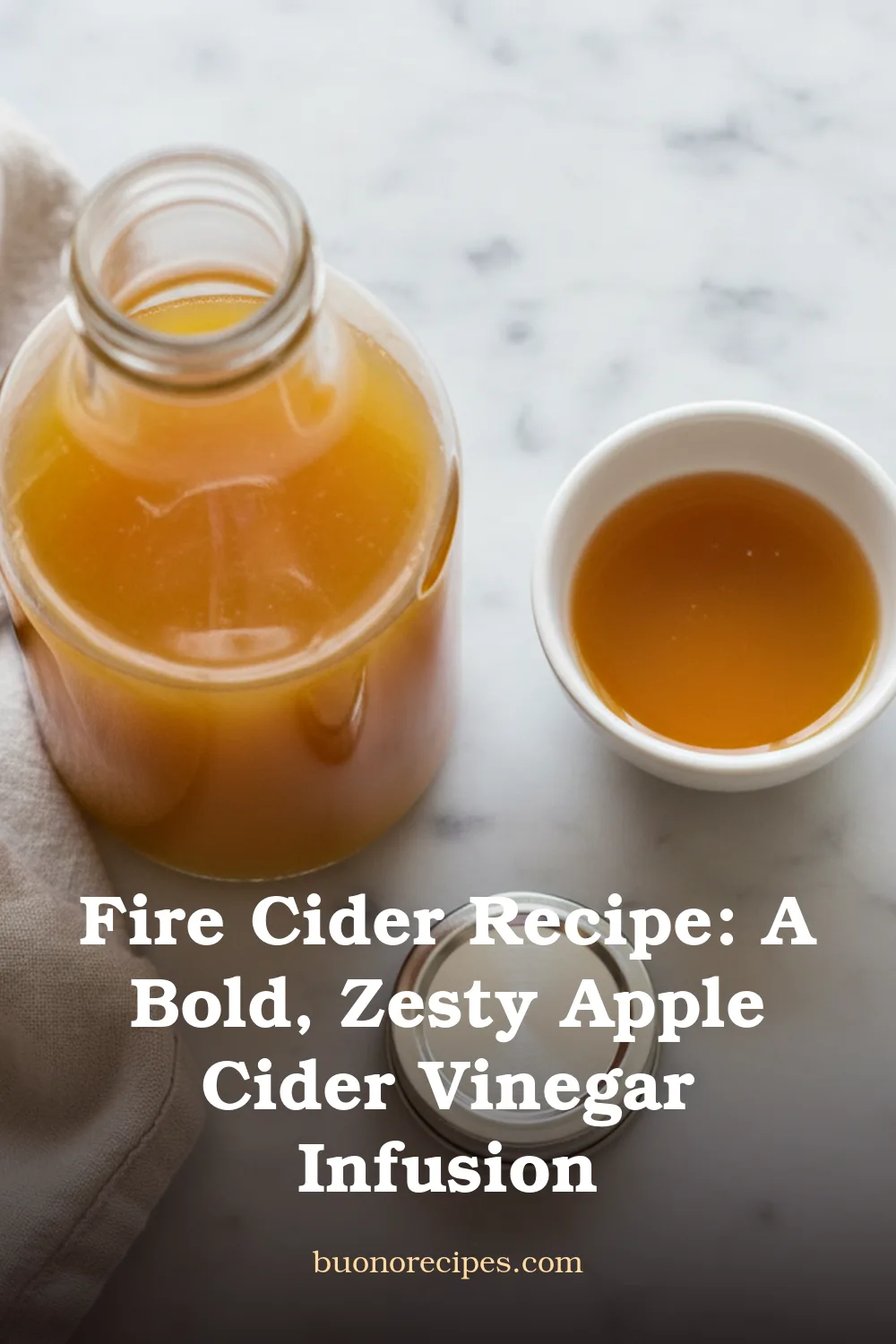
This fire cider recipe is purely a kitchen staple in my house — a flavor builder, not a wellness potion. I started making it years ago after paying too much for a tiny bottle at a farmers market and realizing it was just chopped aromatics in vinegar. Once you see how simple it is, you’ll never go back to store-bought.
The whole thing takes about 20 minutes of hands-on time, then patience while it steeps. Here’s how to make a batch that’s bright, balanced, and genuinely useful in your cooking.
What Is Fire Cider?
Fire cider is a spiced apple cider vinegar infusion that originated in the herbal and folk cooking traditions of New England, popularized in the 1980s. At its core, it’s a culinary vinegar — chopped roots, alliums, citrus, and chiles macerated in vinegar for several weeks until the liquid takes on their sharp, savory, slightly sweet character.
Think of it as a savory shrub or a flavored vinegar with attitude. The result is tangy, pungent, and warming, with a clean burn from the ginger and horseradish. It’s not a hot sauce and it’s not a dressing on its own — it’s a building block that adds depth and brightness to whatever you’re cooking.
This recipe keeps things traditional with the classic lineup: horseradish, ginger, garlic, onion, jalapeño, lemon, orange, and peppercorns, plus a touch of honey added at the end to round out the sharp edges.
Why This Fire Cider Recipe Works
The trick to good fire cider is balance. Too much horseradish and it’s brutal; too little ginger and it loses its warmth. This recipe uses a 1:1 ratio of horseradish to ginger, which gives you a clean, even heat that doesn’t overwhelm the vinegar.
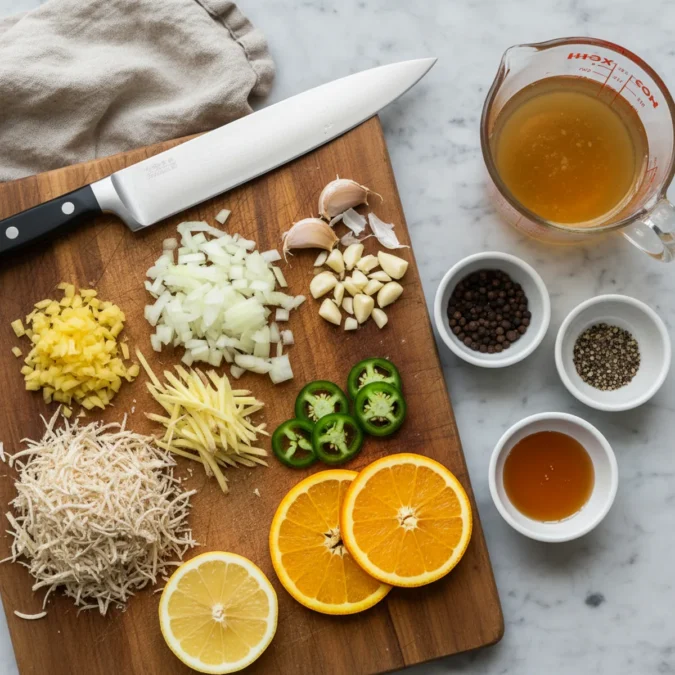
Steeping time matters too. Four weeks is the sweet spot — long enough for the vinegar to pull real flavor out of the roots and alliums, but not so long that the citrus pith starts making things bitter. I’ve tested batches at two weeks (underdeveloped) and eight weeks (slightly muddy), and four is where the flavor clicks.
Adding honey after straining, rather than during steeping, keeps the sweetness fresh and lets you control the level. You can skip it entirely if you want a fully savory vinegar, or bump it up if you plan to use this in cocktails.
Ingredient Notes
Use raw apple cider vinegar with the mother — it has a rounder, fruitier tang than filtered vinegar, and it’s the traditional choice. That said, any decent apple cider vinegar will work if that’s what you have.
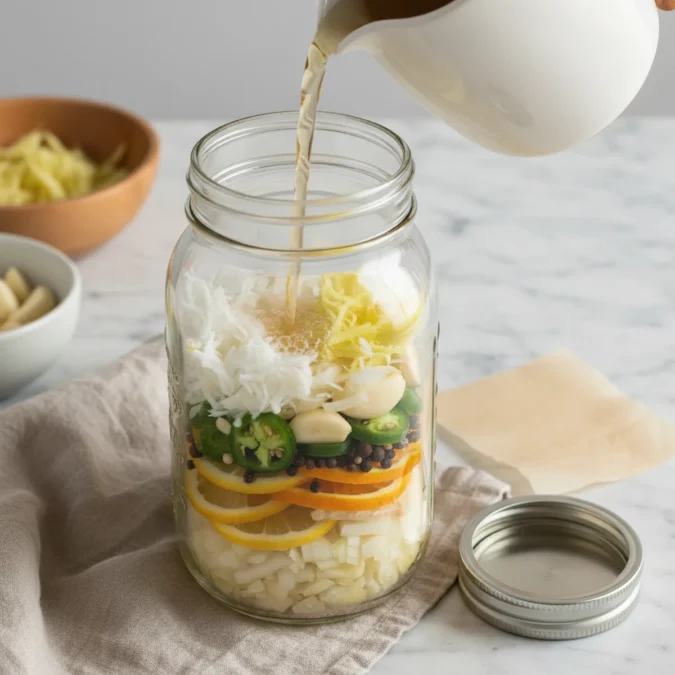
Fresh horseradish root is non-negotiable here. The jarred stuff in cream is not the same product at all — it’s diluted and stabilized, and it’ll throw off the flavor. Look for firm roots with no soft spots; grate it on the fine side of a box grater. Same goes for ginger: fresh, plump, and finely grated.
For chiles, jalapeños give a manageable, bright heat. If you want more fire, swap in a serrano or add a pinch of red pepper flakes. Use organic citrus if you can, since you’re steeping the peels whole — conventionally grown peels carry wax and pesticide residue that you don’t want in a weeks-long infusion.
Ingredient Swaps & Variations
This recipe is forgiving and customizable — that’s part of its tradition. If you can’t find horseradish, increase the ginger slightly and add a teaspoon of whole mustard seeds for a similar sinus-clearing bite.
For a lower-sugar version, skip the honey entirely or use a sugar-free alternative like monk fruit syrup. The vinegar itself has no sugar, so the base recipe is naturally keto-friendly before sweetening.
Vegans should swap the honey for maple syrup or agave. If you want a fruitier infusion, add a handful of fresh cranberries or a chopped apple to the jar before steeping — both are classic variations that soften the sharpness beautifully. Turmeric root is another common addition if you want a golden tint and earthy undertone.
Tips for the Best Batch
Chop everything fairly fine — smaller pieces mean more surface area and better extraction. A food processor works great for the roots and alliums if you don’t want to grate by hand, but don’t puree them into a paste; you want texture for the vinegar to move through.
Use a clean glass jar with a tight-fitting lid. Avoid metal lids in direct contact with the vinegar — the acid will corrode them over weeks. If your jar has a metal lid, place a square of parchment paper or plastic wrap between the lid and the jar rim.
Shake the jar gently every couple of days during steeping. Keep it in a cool, dark spot like a pantry or cupboard — not the fridge, which slows extraction, and not a sunny windowsill, which can degrade the flavor.
How to Use Fire Cider
My favorite way to use fire cider is in vinaigrettes — swap it for plain vinegar in a 1:1 ratio with olive oil, add a little Dijon and salt, and you’ve got a dressing that makes a boring salad genuinely exciting. It’s also fantastic splashed over roasted vegetables, sautéed greens, or braised beans right before serving.
In cocktails, a half-teaspoon of fire cider adds complexity to a Bloody Mary or a whiskey hot toddy. A few dashes in a bowl of broth or ramen will wake up the whole pot. And if you’re a fan of pickled things, try using it as part of the brine for quick-pickled red onions — the flavor is next-level.
Start with small amounts and taste as you go. This is a concentrated flavor agent, not a condiment you pour freely.
Storage & Freezing
Once strained, fire cider keeps indefinitely in a sealed glass bottle in a cool, dark cupboard — the vinegar acts as its own preservative. For best flavor, use it within a year. I label my bottles with the date so I know when a batch is past its prime, though honestly it never lasts that long in my kitchen.
You can refrigerate it if you prefer, which will preserve the brighter top notes a bit longer. It may develop a cloudy sediment over time — that’s totally normal and just particulate from the infused ingredients settling. Give it a shake before using.
Freezing isn’t recommended, as it can dull the flavor and the vinegar won’t freeze solid anyway due to its acidity. Stick with pantry storage and you’re set.
Homemade Fire Cider
Ingredients
Equipment
Method
- Sterilize a quart-sized glass jar with boiling water and let it dry completely.
- Add the grated horseradish, grated ginger, chopped onion, smashed garlic, sliced jalapeños, lemon slices, orange slices, peppercorns, and allspice to the jar.
- Pour the apple cider vinegar over the ingredients, making sure everything is fully submerged. Leave about 1 inch of headspace at the top.
- Seal the jar tightly. If using a metal lid, place a square of parchment paper between the lid and the jar rim to prevent corrosion.
- Store the jar in a cool, dark place for 4 weeks, shaking gently every 2–3 days.
- After 4 weeks, strain the liquid through a fine mesh strainer or cheesecloth into a clean bowl. Press on the solids to extract as much liquid as possible, then discard the solids.
- Whisk the honey into the strained liquid until fully dissolved. Taste and add more honey if you prefer a sweeter balance.
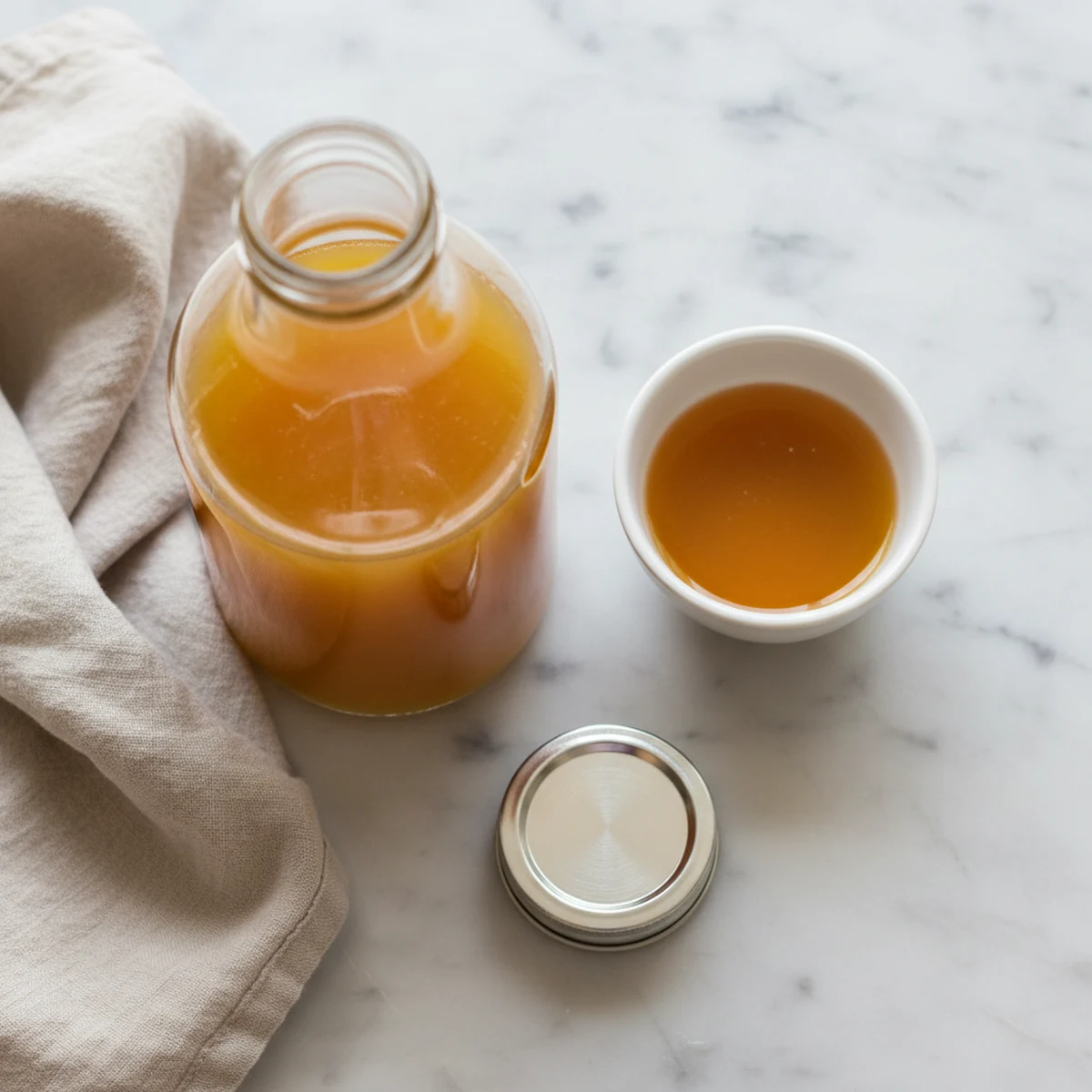
- Pour the finished fire cider into a clean glass bottle and seal. Store in a cool, dark cupboard.
Notes
Frequently Asked Questions
How long does fire cider need to steep?
Four weeks is the sweet spot. Two weeks and the flavor is thin; beyond six weeks, the citrus pith can start adding bitterness. Shake the jar gently every couple of days during steeping to keep the extraction even.
Can I use jarred horseradish instead of fresh?
No — jarred horseradish (especially creamed) is diluted and stabilized, so it won’t give you the clean, sharp bite this recipe needs. Fresh horseradish root is easy to find in the produce section and grates quickly on a box grater.
Do I have to add honey?
Not at all. The honey rounds out the vinegar’s sharpness, but if you want a fully savory infusion for dressings and marinades, skip it. You can always sweeten to taste after straining, or use maple syrup for a vegan version.
Can I reuse the solids after straining?
They’ve given most of their flavor to the vinegar, so they’re pretty spent. That said, you can blend a spoonful into a marinade or salad dressing if you hate waste — just know the flavor will be mild. I usually compost them.
Is this the same as apple cider vinegar with the mother?
Not quite. Fire cider is a flavored infusion made by steeping aromatics in apple cider vinegar (often with the mother). The ‘mother’ refers to the beneficial bacteria culture in raw, unfiltered ACV — you use that as your base, then build the spiced flavor on top of it.
Leave a Reply