
The honey trick recipe circulating online is really just a dead-simple method for turning plain honey into a glossy, clingy glaze that actually sticks to food instead of sliding off. You whisk honey with a little butter and a splash of something acidic — that’s the whole trick — and suddenly you’ve got a glaze that lacquers onto chicken, salmon, roasted carrots, whatever’s on your sheet pan.
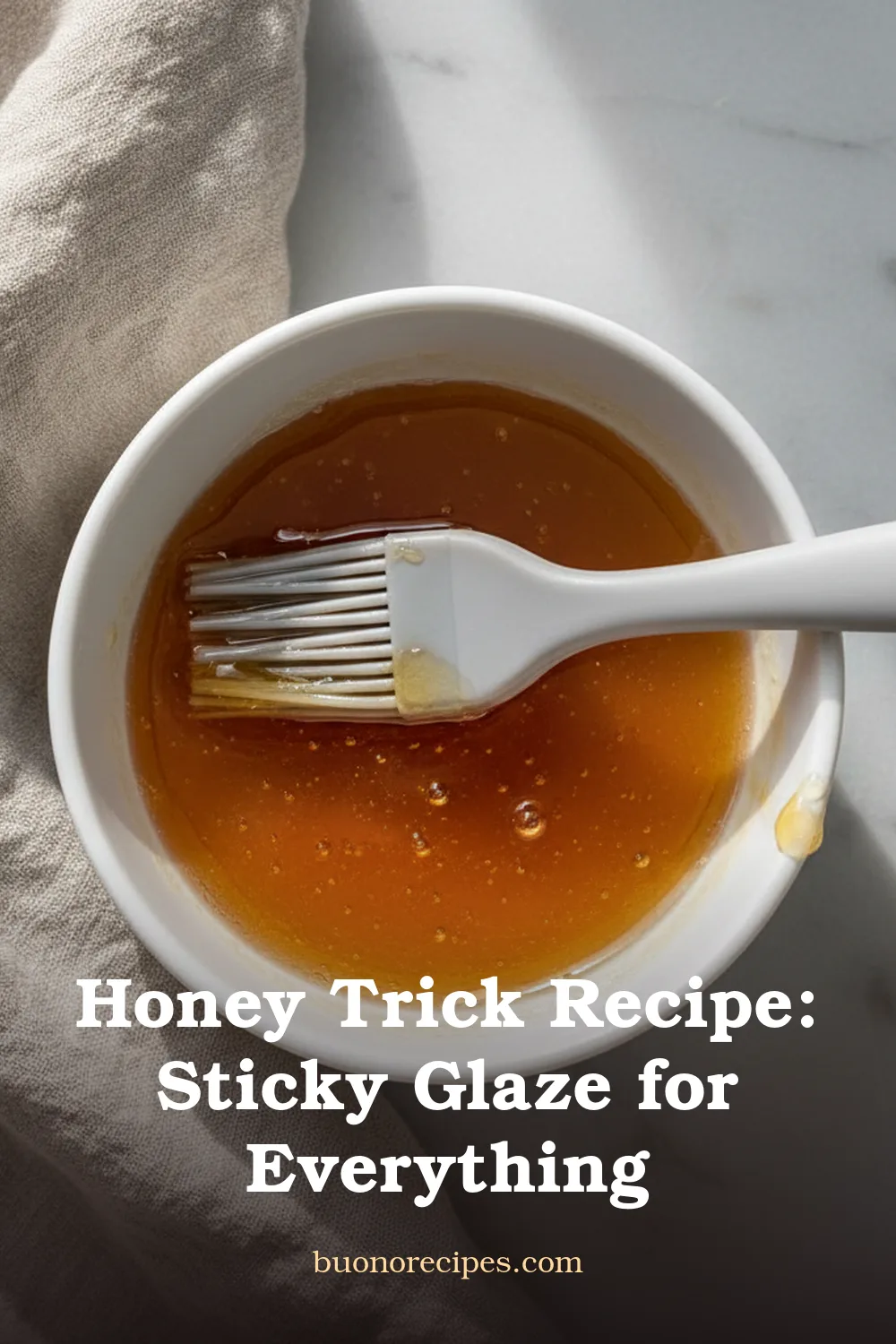
I started making this on busy weeknights when I wanted that sticky-takeout finish without a marinade overnight or a pile of cornstarch slurry. It takes about three minutes and one small pot, and it keeps in the fridge for weeks.
Here’s how to make the honey trick glaze yourself, plus all the ways I actually use it around my kitchen.
What Is the Honey Trick Recipe?
The honey trick recipe is a viral cooking method where you transform raw honey into a thick, brushable glaze by emulsifying it with butter and an acid like apple cider vinegar or lemon juice. The butter gives it body so it clings to food, and the acid balances the sweetness so it doesn’t taste like dessert on your dinner.
On its own, honey tends to slide right off proteins and pool at the bottom of the pan. That’s why a lot of “honey glazed” recipes end up looking pale and sad. This trick fixes that — the emulsion creates a coating that caramelizes into a beautiful sticky crust under heat.
Think of it as a lazy person’s teriyaki glaze. No soy sauce, no ginger, no reducing for twenty minutes. Just three pantry ingredients and a whisk.
Why This Recipe Works
The science here is straightforward: fat and liquid don’t naturally mix, but when you heat honey and butter together and whisk aggressively, the butter breaks into tiny droplets that suspend in the honey. Add a splash of acid and a pinch of salt, and you’ve got a stable emulsion that coats evenly.
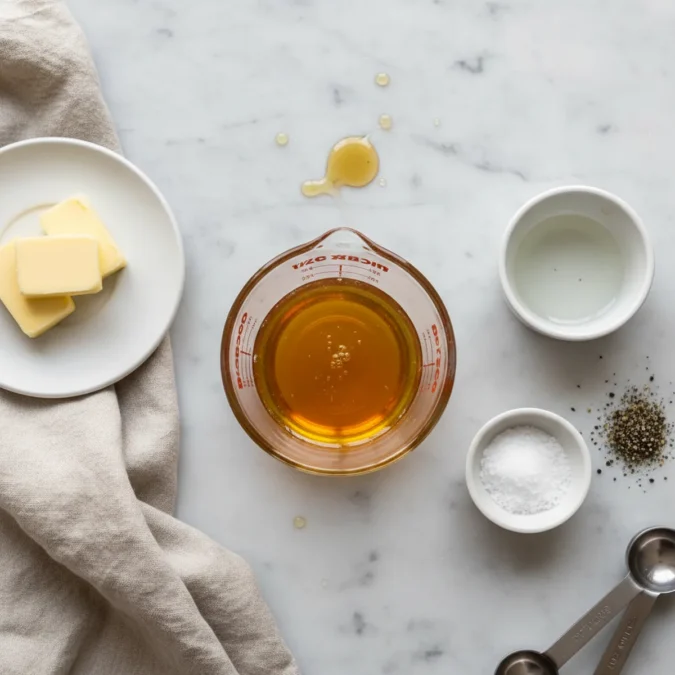
I’ve tested this glaze on chicken thighs, salmon fillets, roasted Brussels sprouts, and even thick-cut toast. Every time, it forms that glossy, lacquered finish you’d expect from a restaurant kitchen. The key is applying it during the last few minutes of cooking so the sugars caramelize without burning.
One thing I learned the hard way: don’t brush it on raw meat at the start. Honey burns fast at high heat. Save it for the final five to eight minutes, or broil for two minutes at the end for maximum stickiness.
Ingredients and Smart Swaps
The base recipe is honey, butter, apple cider vinegar, and salt. Use a honey you actually like the taste of — clover is mild and neutral, wildflower is more complex, buckwheat is intense and almost molasses-like. Since this glaze is mostly honey, the flavor comes through.
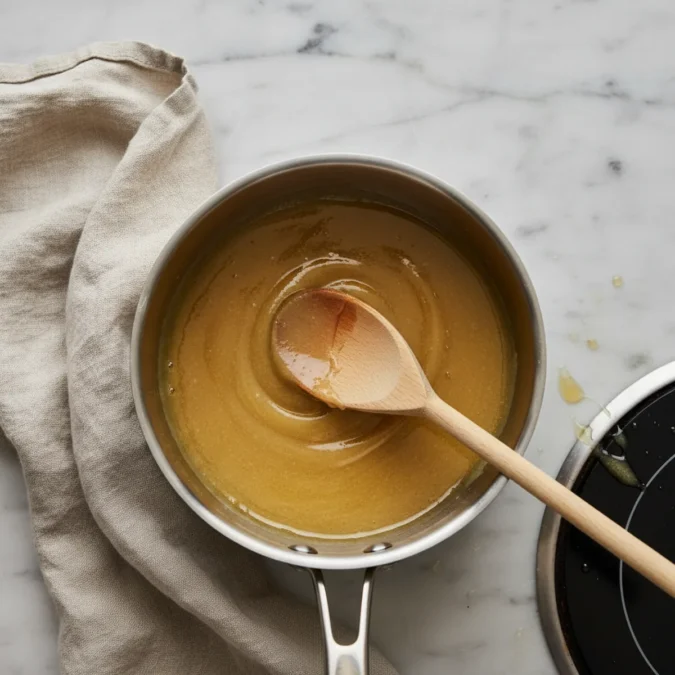
For butter, unsalted is best so you can control the salt level. If you’re dairy-free, coconut oil works surprisingly well and adds a subtle tropical note that pairs nicely with salmon or shrimp. Olive oil also works but gives a more savory, Mediterranean lean.
Vegan? Swap the butter for vegan butter or coconut oil and you’re set. Keto-friendly? Substitute the honey with a sugar-free honey alternative like ChocZero or a monk fruit syrup — the emulsion trick still works because it’s about fat plus liquid, not the sugar itself. Gluten-free folks are already covered since there’s no flour or soy sauce in this version.
How to Use the Honey Glaze
My favorite application is sheet-pan chicken thighs. Roast them skin-side down at 425°F for about twenty minutes, flip, brush on the honey glaze, and roast another eight to ten minutes until the skin is sticky and deeply golden. The glaze gets into every crevice.
For salmon, brush it on during the last four minutes under the broiler. The sugars caramelize into a crust that rivals any honey-walnut shrimp situation. For vegetables — carrots, Brussels sprouts, sweet potatoes — toss them in olive oil and roast until almost done, then drizzle the glaze over and roast two more minutes.
You can also use this as a finishing sauce for grilled pork chops, a drizzle over goat cheese and crostini, or even a quick glaze for donuts and biscuits. It’s versatile enough to live in a squeeze bottle in your fridge door.
Storage and Make-Ahead Tips
This glaze keeps beautifully. Store it in a glass jar with a tight lid in the fridge for up to three weeks. The butter will solidify and the mixture will look cloudy and firm — that’s totally fine. Just scoop out what you need and warm it gently in the microwave for fifteen seconds or in a small pot over low heat, whisking until it comes back together.
You can also freeze it in ice cube trays, then pop out the cubes and store them in a freezer bag. Each cube is roughly two tablespoons, which is perfect for a single serving of salmon or a small batch of roasted veggies. Frozen glaze lasts about three months.
One caution: if the glaze separates after sitting in the fridge, don’t panic. Reheat gently and whisk vigorously — it’ll re-emulsify. If it’s being stubborn, add a few drops of hot water and whisk again.
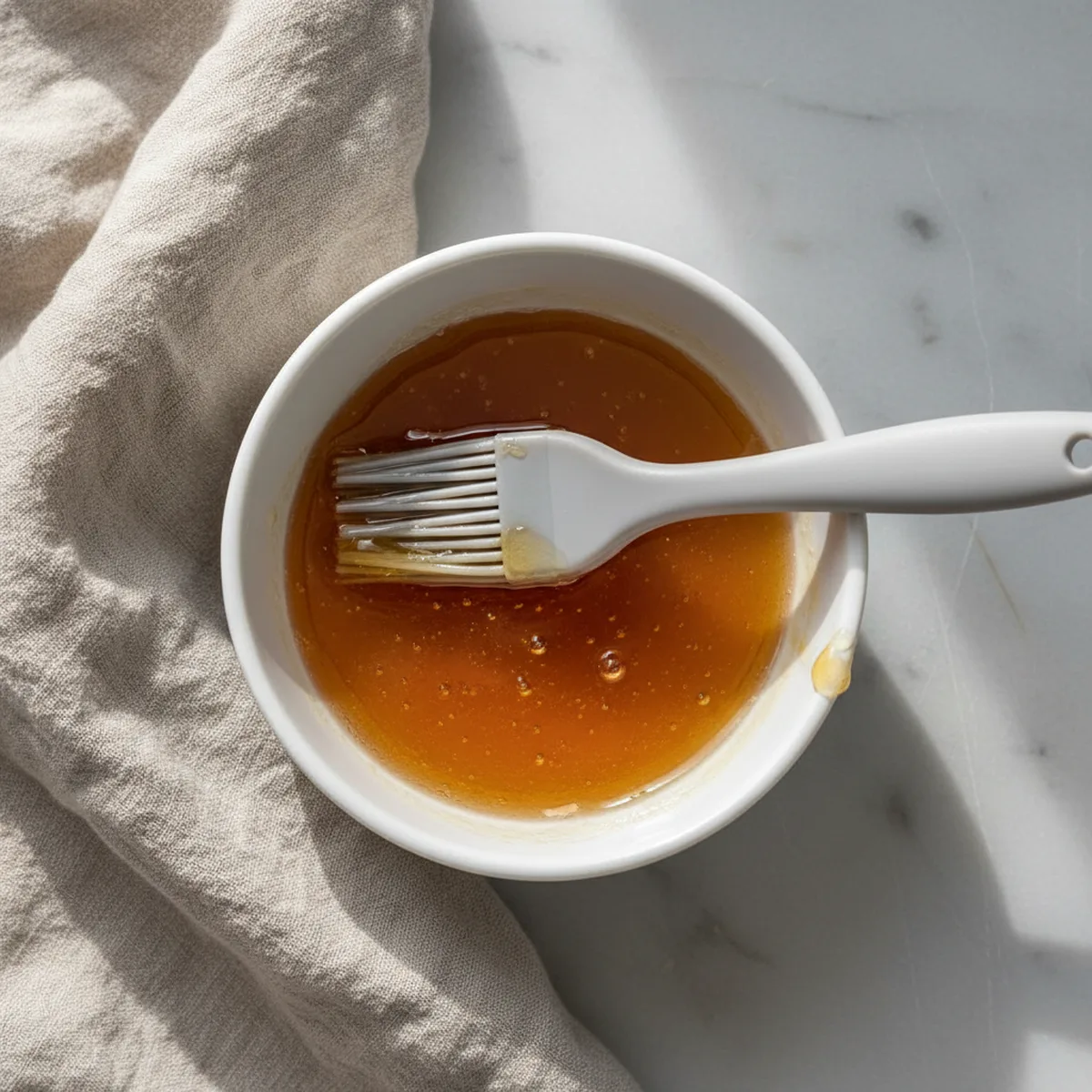
Honey Trick Glaze
Ingredients
Equipment
Method
- In a small saucepan over low heat, combine the honey and butter.
- Stir gently until the butter is fully melted and the mixture is warm but not bubbling.
- Remove from heat and whisk vigorously for about 30 seconds to emulsify.
- Whisk in the apple cider vinegar, salt, and pepper until smooth and glossy.
- Let cool for 2 minutes before brushing onto food during the last 5-8 minutes of cooking.
- Store any leftover glaze in a glass jar in the refrigerator for up to 3 weeks.
Notes
Frequently Asked Questions
What is the honey trick recipe exactly?
It’s a cooking method where you emulsify honey with butter and a splash of acid to create a glaze that actually clings to food instead of sliding off. The result is a sticky, glossy coating that caramelizes beautifully under heat — think restaurant-style lacquered chicken or salmon.
Can I make the honey trick glaze ahead of time?
Absolutely. Make a batch, store it in a glass jar in the fridge for up to three weeks, and reheat small portions as needed. Warm it gently for about fifteen seconds in the microwave and whisk to bring the emulsion back together before using.
Is there a vegan version of this honey glaze?
Yes — swap the butter for coconut oil or vegan butter, and substitute the honey with a vegan honey alternative like agave or a maple-agave blend. The emulsion trick still works because it relies on fat plus liquid, not any specific animal product.
Why does my honey glaze slide off the food?
Plain honey is too thin and watery to cling to proteins on its own. The trick is adding butter, which gives the glaze body and helps it adhere. Whisking vigorously while warm creates a stable emulsion that coats evenly and caramelizes into a sticky crust.
Can I use this glaze on grilled food?
Definitely. Brush it on during the last two to three minutes of grilling, after you’ve moved the food to indirect heat. Direct flame will burn the honey quickly, so keep things moving and watch closely for that golden-brown caramelization.
Leave a Reply