
This eel sauce recipe gives you that thick, glossy, sweet-savory glaze drizzled over dragon rolls and grilled unagi — and it takes about 15 minutes with four pantry ingredients. No actual eel required. The name comes from what it’s traditionally brushed on, not what’s in it.
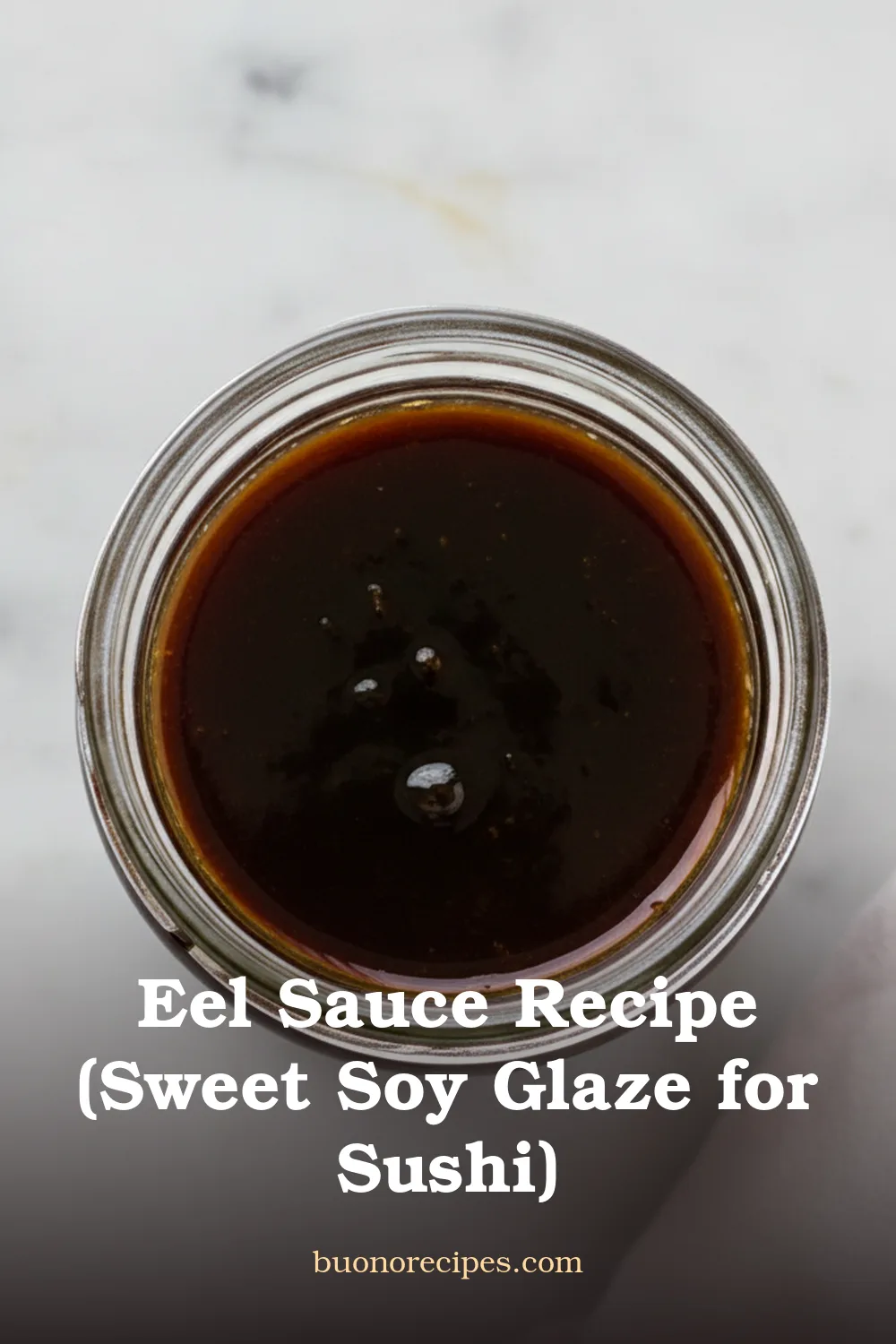
The trick is reducing soy sauce, mirin, sake, and sugar until it coats the back of a spoon like a thin syrup. Too runny and it slides off your sushi; too thick and it turns into caramel. I learned that the hard way after over-reducing my first batch into a sticky brick.
Once you make this eel sauce recipe at home, you’ll keep a jar in the fridge permanently. It’s cheaper than the little bottles from the sushi counter and tastes fresher, too.
What Is Eel Sauce?
Eel sauce — also called nitsume or unagi tare in Japanese cooking — is a reduced glaze of soy sauce, mirin, sake, and sugar. Despite the name, it contains zero eel. It earned the label because it’s the classic finish for grilled unagi (freshwater eel) and is drizzled over countless sushi rolls in American Japanese restaurants.
Think of it as the sweet cousin to teriyaki sauce. It’s darker, thicker, and more intensely savory-sweet, with a lacquered shine that clings to rice and fish. If you’ve had a dragon roll, caterpillar roll, or anything topped with that dark glossy drizzle, you’ve had eel sauce.
Why This Eel Sauce Recipe Works
The magic is in the ratio and the reduction. Too much sugar and it cloy; too little and it reads as just salty soy. This recipe uses a 1:1:1:1 base — equal parts soy sauce, mirin, sake, and sugar — which hits the classic Japanese balance of sweet, salty, and umami without tipping in any one direction.

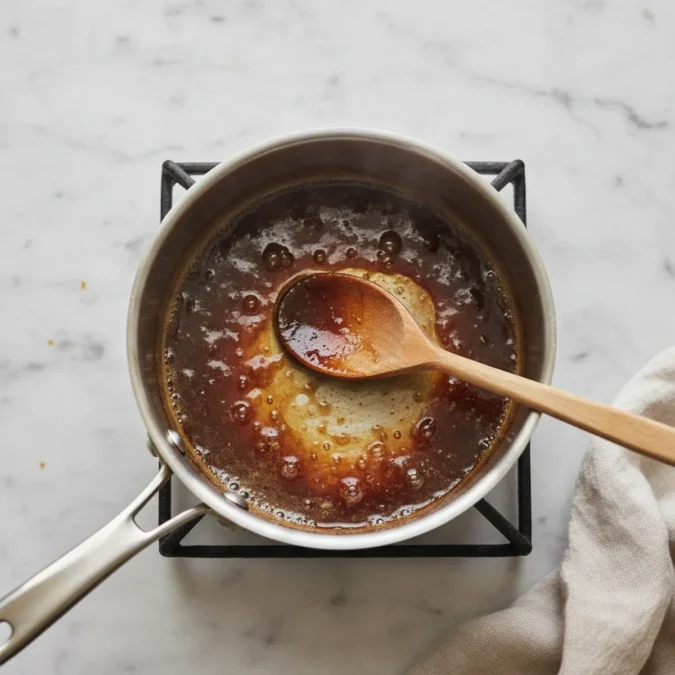
Reducing by about half concentrates the flavors and thickens the sauce naturally, no cornstarch needed. You’ll know it’s done when it coats a spoon and leaves a clean trail when you run your finger through it. It continues thickening as it cools, so pull it off the heat slightly before it looks perfect.
One batch makes about ⅓ cup, which goes a long way — you only need a drizzle per roll. Double it if you’re meal-prepping sushi night for a crowd.
Ingredients Notes
Use a decent Japanese soy sauce like Kikkoman — not the low-sodium version, which throws off the salt balance and makes the sauce taste flat. Dark soy sauce works too but produces a heavier, less bright result.
Mirin is the sweet rice wine that gives the sauce its characteristic shine and subtle complexity. Look for hon-mirin (real mirin) rather than mirin-fu chomiryo (mirin-style seasoning), which is basically corn syrup with flavoring. If you only have the fake stuff, it’ll still work, but real mirin tastes noticeably better.
Sake adds a delicate rice aroma and helps the sugar dissolve evenly. Don’t use cooking sake with added salt — use drinking sake, or substitute dry sherry in a pinch. White sugar is standard; brown sugar adds a deeper caramel note if that’s what you have.
Ingredient Swaps & Dietary Options
Gluten-free: swap the soy sauce for tamari. The flavor is nearly identical and the sauce behaves the same way. Check that your mirin is gluten-free too — most are, but labels vary.
Keto/low-carb: replace the sugar with monk fruit sweetener or allulose, using about ⅓ cup to match the sweetness. The texture won’t be quite as syrupy, but the flavor profile holds up. Skip sake if you’re strict, and use a splash of rice vinegar instead for brightness.
No sake? Substitute dry sherry or dry white wine. No mirin? Mix 2 tablespoons dry sherry with 1 teaspoon sugar per tablespoon of mirin called for. These swaps won’t be identical, but they get you close enough for a weeknight sushi craving.
Tips for Perfect Eel Sauce
Use a small saucepan — a wide one reduces faster, but a narrow one gives you better control over the consistency. Stir frequently once it starts bubbling, because the sugar can scorch quickly near the end.
Test the thickness by dipping a spoon, then running your finger through the coating. If it leaves a clean line that doesn’t immediately fill back in, it’s ready. Remember it thickens more as it cools, so err on the slightly thin side.
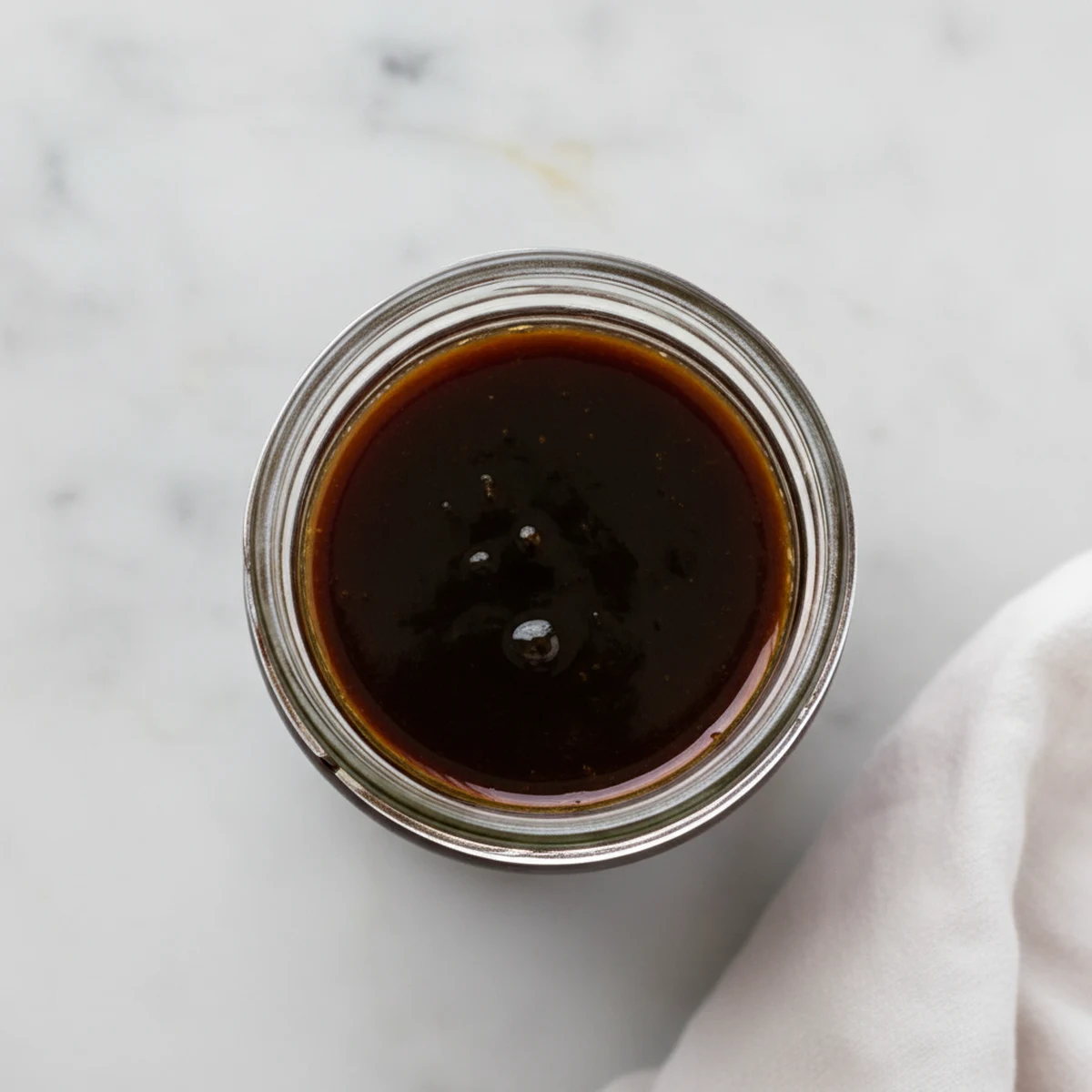
Store it in a clean glass jar or squeeze bottle. A squeeze bottle is honestly the move if you want those neat restaurant-style drizzles over rolls — way better than trying to pour from a measuring cup.
Serving Ideas & Storage
Drizzle it over California rolls, dragon rolls, or any nigiri topped with grilled eel or avocado. Brush it on grilled chicken thighs or salmon in the last minute of cooking for an instant teriyaki-style glaze. It’s also fantastic on rice bowls, steamed broccoli, or even scrambled eggs if you’re feeling adventurous.
Stored in an airtight jar in the fridge, this sauce keeps for up to a month. The sugar acts as a natural preservative. It’ll thicken when cold — just microwave for 10 seconds or let it sit at room temp for a few minutes to loosen it up before using. Don’t freeze it; the texture separates and gets grainy when thawed.
Homemade Eel Sauce (Unagi Tare)
Ingredients
Equipment
Method
- Combine soy sauce, mirin, sake, and sugar in a small saucepan.
- Place over medium heat and stir until the sugar fully dissolves, about 2 minutes.
- Bring to a gentle boil, then reduce heat to medium-low.
- Simmer uncovered for 10-12 minutes, stirring occasionally, until the volume reduces by about half.
- Test by dipping a spoon — the sauce should coat it and leave a clean line when you run your finger through.
- Remove from heat; it will thicken further as it cools.
- Transfer to a clean glass jar or squeeze bottle and let cool completely before storing.
Notes
Frequently Asked Questions
Does eel sauce actually contain eel?
Nope — zero eel in it. The name comes from its traditional use as a glaze for grilled unagi (freshwater eel). It’s just soy sauce, mirin, sake, and sugar, reduced into a thick sweet-savory syrup.
How long does homemade eel sauce last?
Stored in an airtight jar in the fridge, it keeps for up to a month. The sugar acts as a natural preservative. It’ll thicken when cold, so warm it slightly before drizzling.
Can I make eel sauce without sake?
Yes — substitute dry sherry or dry white wine in equal amounts. The flavor won’t be identical, but it gets you close. If you’re avoiding alcohol entirely, use a splash of rice vinegar with an extra teaspoon of sugar.
Is eel sauce the same as teriyaki sauce?
They’re cousins, not twins. Eel sauce is thicker, darker, and more intensely sweet-savory with no added ginger or garlic. Teriyaki usually includes aromatics and is thinner. This recipe is the classic nitsume-style glaze, not a teriyaki variation.
Why is my eel sauce too thick or too thin?
If it’s too thick, you over-reduced it — add a splash of water and stir over low heat. If it’s too thin, simmer it a few more minutes. It also thickens as it cools, so pull it off the heat when it’s still slightly runnier than you want.
Leave a Reply