
A good piccata sauce recipe is basically liquid gold — butter, lemon, white wine, and capers whisked into a silky pan sauce that tastes like you paid $28 for it. The secret isn’t fancy ingredients; it’s technique and timing.
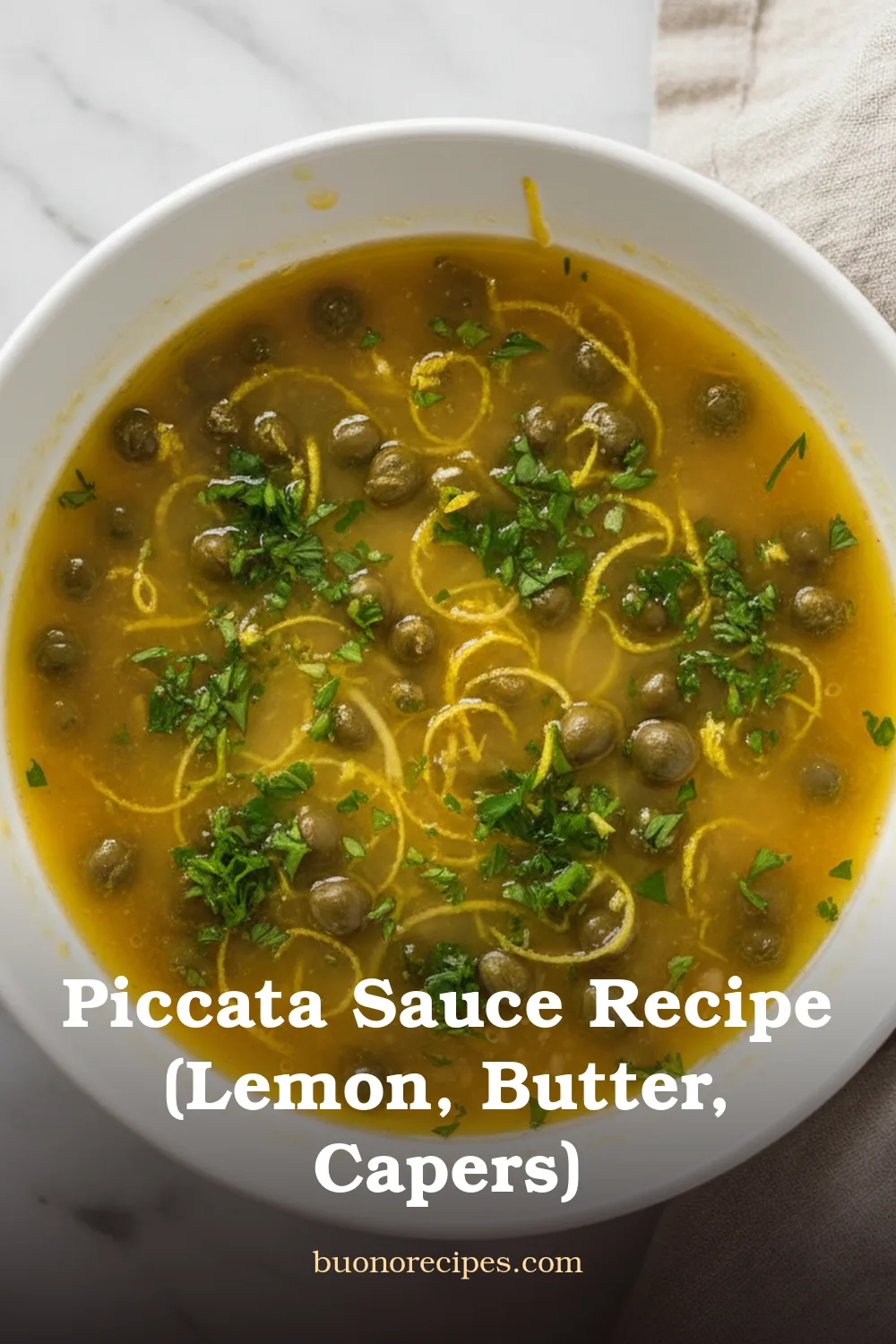
I’ve messed this sauce up plenty of times — split it, over-reduced it, nuked the lemon until it turned bitter. The version below is the one that finally clicked, and now it’s my weeknight go-to for chicken, fish, and even roasted cauliflower when I’m pretending to be healthy.
Once you nail the base, you’ll start drizzling this on everything. It’s that good.
What Is Piccata Sauce?
Piccata sauce is a classic Italian-American pan sauce built on a simple foundation: butter, lemon juice, white wine, capers, and a splash of broth. It’s briny, bright, and rich all at once — the kind of sauce that makes you want to drag bread across the plate.
The name “piccata” refers to the cooking method (sautéing thin cutlets) rather than the sauce itself, but over time the sauce became the star. It’s most famous paired with chicken piccata, but it works beautifully on veal, sole, shrimp, and pork tenderloin.
Traditional Italian versions are lighter on butter than what you’ll find in most American restaurants, but that buttery finish is what makes the sauce cling and shine. We’re going for the best of both worlds here.
Why This Piccata Sauce Recipe Works
Most home cooks ruin piccata sauce by boiling the lemon juice too hard or dumping all the butter in at once. This recipe solves both problems. The lemon goes in early enough to mellow but doesn’t reduce to nothing, and the butter is added off-heat in stages so it emulsifies into a glossy, cohesive sauce.
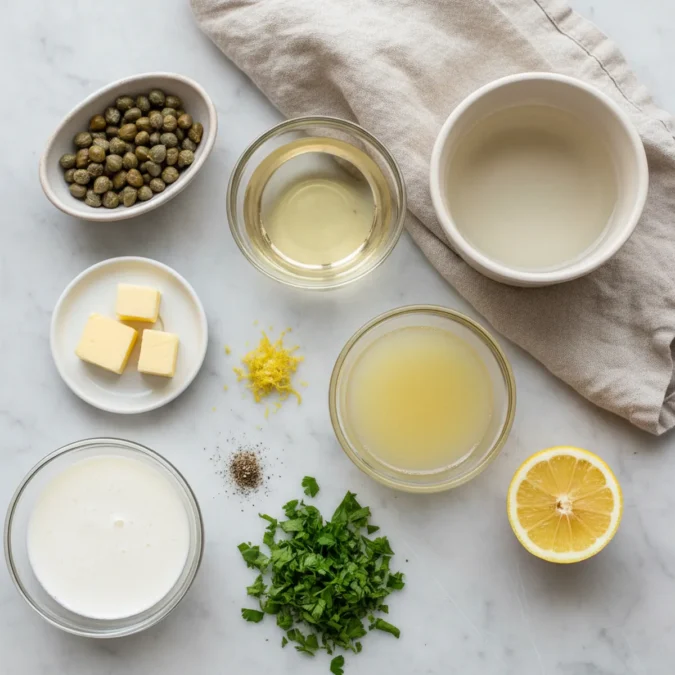
Using a cornstarch slurry instead of a traditional flour roux keeps the sauce gluten-free without sacrificing body. You still get that restaurant-quality sheen and coating power.
The caper-to-liquid ratio is dialed in so every spoonful gets a pop of brine without overwhelming the sauce. And the white wine adds depth that broth alone can’t deliver — but I’ve included a substitution if you need to skip the alcohol.
Ingredient Notes
Butter: Use unsalted butter so you can control the seasoning. The butter is doing heavy lifting here, so don’t substitute margarine or oil — you need the milk solids for that golden color and emulsion.
Lemons: Fresh lemon juice only. Bottled juice tastes flat and metallic in a sauce this simple. One medium lemon gives you about 3 tablespoons, and you’ll want zest for extra punch.
White wine: A dry, crisp white like Pinot Grigio or Sauvignon Blanc. Avoid oaky Chardonnay — it fights the lemon. If you can’t use wine, substitute equal parts chicken broth plus a splash of white wine vinegar.
Capers: Use the small, nonpareil capers packed in brine. Drain them but don’t rinse — that brine adds flavor. If you only have capers in salt, rinse them first and reduce the added salt slightly.
Chicken broth: Low-sodium so the sauce doesn’t get too salty, especially with capers in the mix.
Ingredient Swaps & Dietary Options
Gluten-free: This recipe is already gluten-free thanks to the cornstarch slurry. Just double-check your broth label.
Dairy-free/vegan: Substitute the butter with a high-quality vegan butter stick (Miyoko’s or Earth Balance work well). The sauce won’t be quite as rich, but the lemon and capers carry it. Use vegetable broth instead of chicken.
Keto-friendly: Swap the cornstarch for 1/2 teaspoon xanthan gum whisked into the cold broth before adding. Replace the wine with extra broth plus a teaspoon of white wine vinegar. The sauce will be slightly thinner but still delicious.
No wine on hand? Use 1/4 cup broth plus 1 tablespoon white wine vinegar or lemon juice. You lose a little complexity, but the sauce still works.
Tips for Perfect Piccata Sauce
Take the pan off the heat before adding the butter. If the liquid is boiling when you add cold butter, it’ll split instead of emulsifying. Whisk constantly and add the butter pieces one at a time, waiting for each to melt before adding the next.
Don’t over-reduce the wine. You want it to cook down by about half — maybe 2 minutes. If you cook it until the pan is nearly dry, the sauce will taste harsh and acidic.
Taste before adding salt. Between the capers, broth, and butter, this sauce can sneak up on you. Add salt at the very end, only if needed.
Make the sauce in the same pan you cooked your protein in. Those browned bits (fond) on the bottom of the pan are pure flavor. Deglaze with the wine and scrape them up — that’s restaurant sauce 101.
Serving & Storage
Piccata sauce is best served immediately over chicken piccata, pan-seared sole, shrimp, or pork medallions. Spoon it generously and don’t be shy — it’s the whole point.
If you’re serving it with pasta, toss the cooked pasta in the sauce with a splash of pasta water to loosen it. Thin spaghetti or angel hair works best.
Storage: This sauce doesn’t hold well because the butter will separate and the lemon will dull. If you must make it ahead, store in an airtight container in the fridge for up to 2 days, then gently reheat in a saucepan over low heat while whisking constantly. Do not microwave — it will split.
Freezing is not recommended. The emulsion breaks and the texture becomes greasy. Make it fresh — it takes 10 minutes.
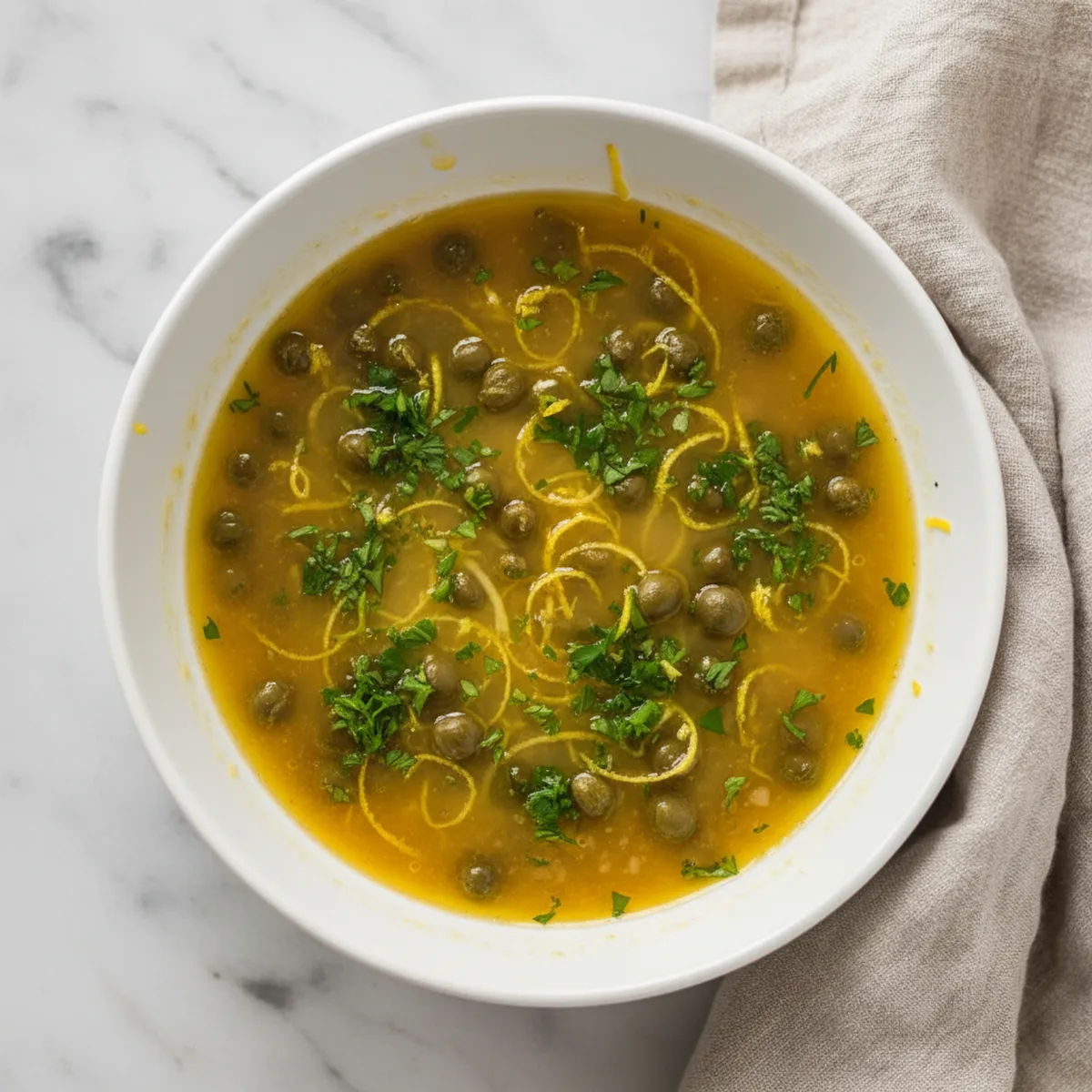
Piccata Sauce (Lemon, Butter, and Capers)
Ingredients
Equipment
Method
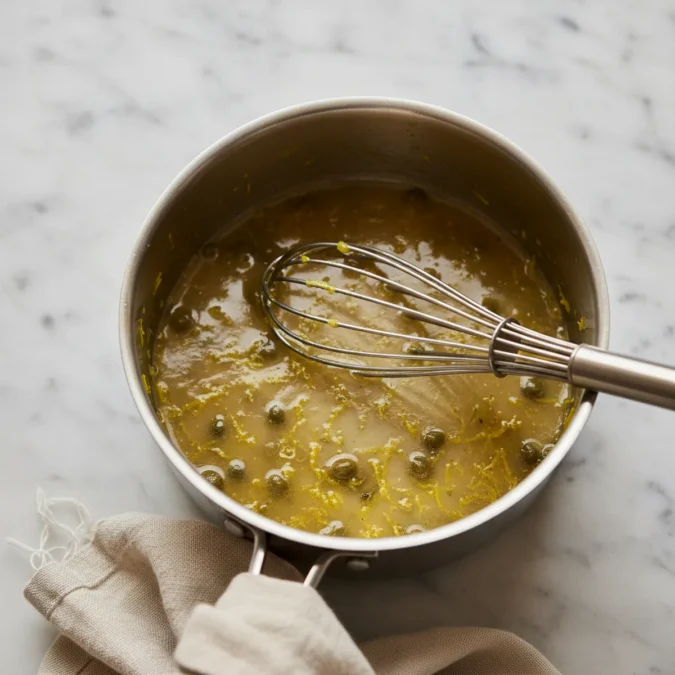
- In a small saucepan or skillet over medium heat, add the white wine and bring to a gentle simmer. Cook until reduced by half, about 2 minutes.
- Add the chicken broth, lemon juice, lemon zest, capers, and black pepper. Bring to a low simmer and cook for 2 minutes to meld the flavors.
- Whisk the cornstarch slurry to recombine, then pour it into the sauce while whisking constantly. Simmer for 1 minute until the sauce thickens slightly.
- Remove the pan from the heat. Add one piece of butter and whisk until fully melted and incorporated. Repeat with the remaining butter pieces, one at a time.
- Taste and add salt only if needed (capers and broth are already salty). Stir in chopped parsley if using. Serve immediately over chicken, fish, or pork.
Notes
Frequently Asked Questions
Can I make piccata sauce without wine?
Yes. Replace the wine with 1/4 cup chicken broth plus 1 tablespoon white wine vinegar or extra lemon juice. You’ll lose a little complexity, but the sauce still tastes great. Add the vinegar with the broth in step 2.
Why did my piccata sauce separate?
The pan was too hot when you added the butter. Take the pan completely off the heat before adding the butter, and add it one piece at a time, whisking until each piece melts. Cold butter also helps — keep it in the fridge until the last second.
What can I use instead of capers?
Chopped green olives or chopped cornichons are the closest substitutes. They bring that same briny, salty punch. Use about the same amount, and taste before adding extra salt since brine levels vary.
Can I make piccata sauce ahead of time?
It’s not ideal because the butter emulsion breaks as it sits. If you need to prep ahead, make the sauce base (steps 1-3) and refrigerate. Reheat gently over low heat, then whisk in the butter right before serving.
Is piccata sauce gluten-free?
Yes, this version is gluten-free because it uses a cornstarch slurry instead of a flour-based roux. Just verify your chicken broth and wine are certified gluten-free if that’s a concern for you.
Leave a Reply