
Thick, savory, and spoonable — this hot dog sauce recipe gives you that classic loose-meat topping that clings to every bite of your dog instead of sliding off the bun.
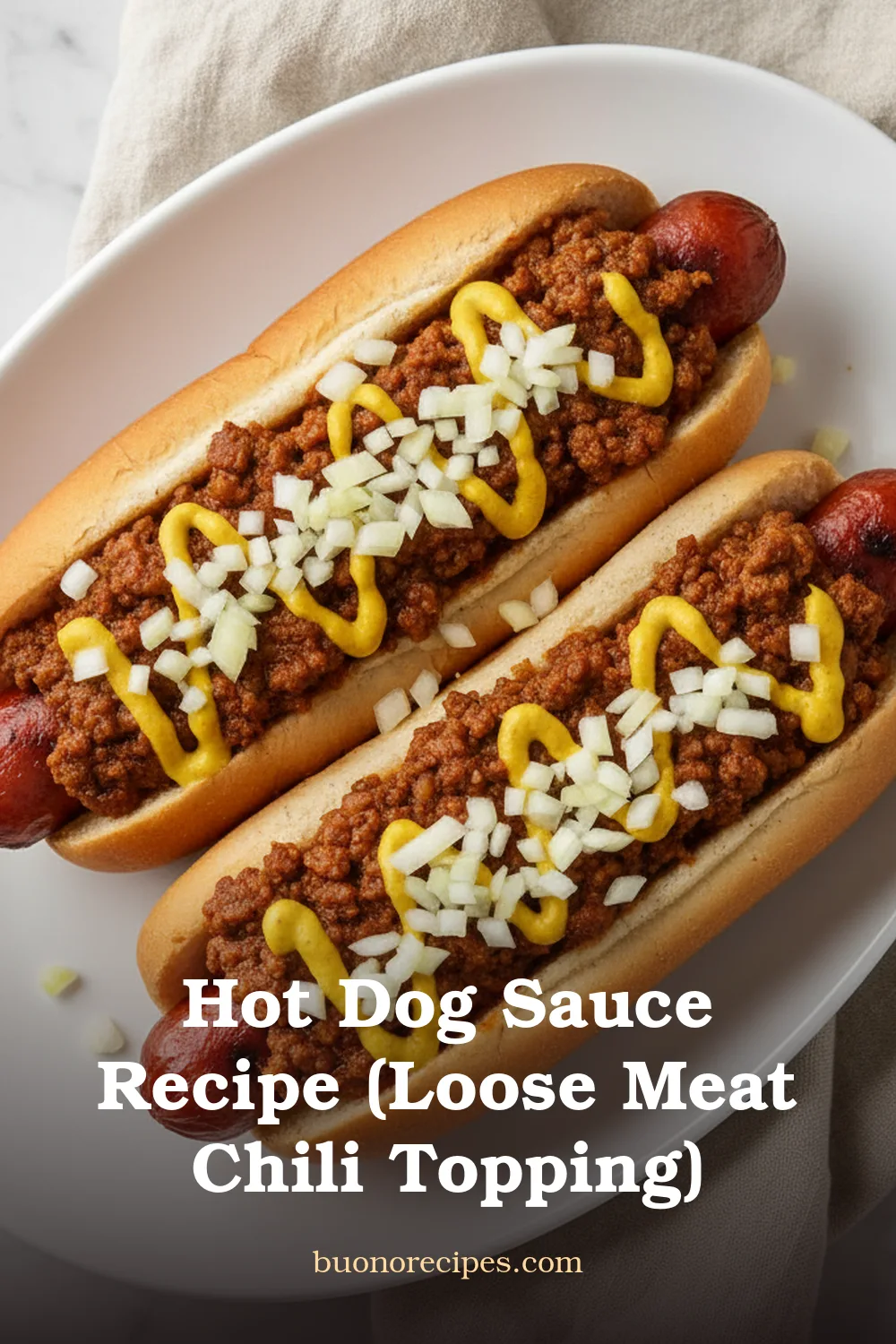
If you grew up going to drive-ins in West Virginia or Ohio, you already know the magic. It’s not chili — it’s finer, looser, and built specifically to sit on a hot dog without making a mess.
My version uses a simple trick: boiling the ground beef instead of browning it, so you get that signature fine, velvety texture that’s impossible to replicate with standard crumbles.
What Is Hot Dog Sauce?
Hot dog sauce is a regional American condiment — a loose, finely textured ground beef mixture simmered with tomato, onion, and warm spices. It’s most famous in West Virginia, where it’s the default topping at nearly every hot dog stand, but you’ll find variations across Ohio, Kentucky, and parts of the South.
Unlike Texas chili or Cincinnati chili, this sauce has no beans, no chunks, and no heavy chili powder presence. The beef is broken down so fine it almost melts into the sauce, creating a velvety layer that coats the hot dog perfectly.
It’s the kind of topping that turns a backyard cookout into something people actually remember.
Why This Hot Dog Sauce Recipe Works
The secret is in how you cook the beef. Instead of browning it in oil and draining the fat, you simmer raw ground beef directly in liquid, breaking it apart with a whisk or potato masher as it cooks. This gives you that ultra-fine, almost creamy texture that’s the hallmark of authentic drive-in sauce.
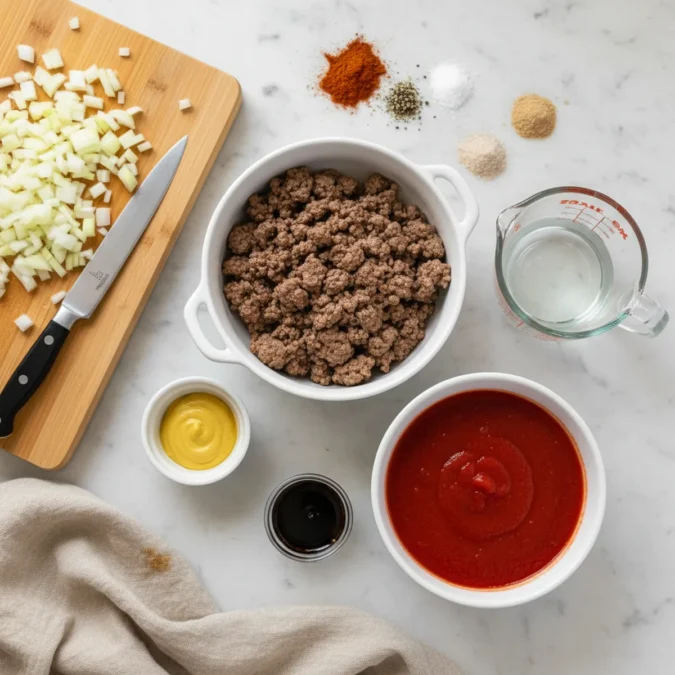
I tested this with both 80/20 and 93/7 beef, and honestly the leaner stuff works great here since you’re not relying on rendered fat for flavor — the sauce itself carries it. That also makes it a little lighter without sacrificing taste.
The spice blend is deliberately simple: chili powder, mustard, a touch of sugar, and Worcestershire. Nothing fancy, nothing that overpowers the hot dog underneath.
Ingredient Notes
Ground beef: 85/15 or 90/10 works best. The boiling method means you don’t need high-fat beef for flavor, and leaner meat gives a cleaner texture.
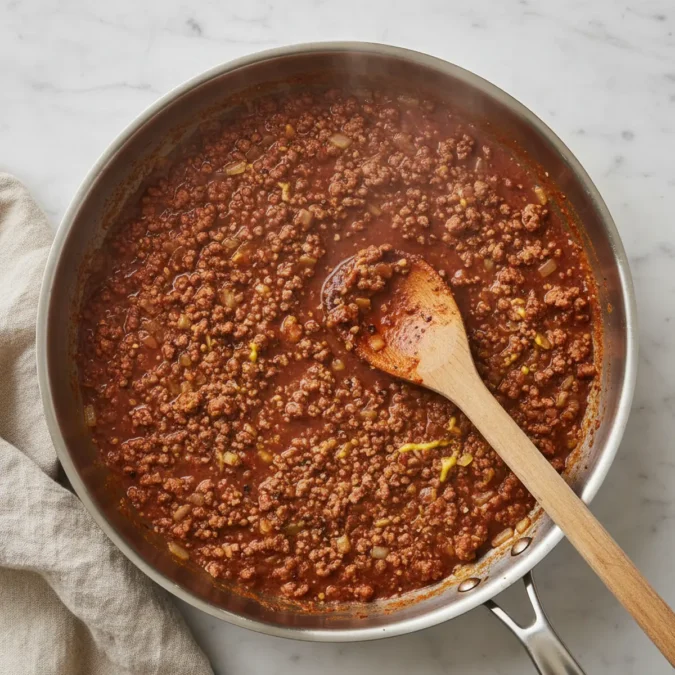
Tomato sauce: Use plain, unseasoned canned tomato sauce — not marinara or pizza sauce. You want a neutral tomato base that lets the spices do the talking.
Yellow mustard: This is non-negotiable for authentic flavor. Dijon or spicy brown will change the profile too much. Plain yellow mustard is what the drive-ins use.
Chili powder: A standard blend is fine. If yours is very old, replace it — stale chili powder is the #1 reason homemade sauce tastes flat.
Ingredient Swaps & Dietary Options
Gluten-free: This recipe is naturally gluten-free as written. Just double-check your Worcestershire sauce label — Lea & Perrins original is GF, but some store brands contain barley.
Keto: Swap the sugar for a pinch of erythritol and use a low-sugar tomato sauce (or dilute tomato paste with water). Each serving drops to roughly 3g net carbs.
Vegan: Use a plant-based ground crumble (Beyond or Impossible work well) and vegan Worcestershire. The texture won’t be quite as fine, but the flavor profile lands close. Simmer a few minutes less since the crumbles are pre-cooked.
Turkey or chicken: Ground turkey works if you add 1 tablespoon of olive oil to compensate for the lower fat. The sauce will be slightly lighter in color but still tasty.
Tips for the Best Sauce
Use a whisk, not a spatula. A whisk breaks the beef into the finest possible particles as it simmers — this is the single biggest difference between homemade sauce that tastes authentic and sauce that tastes like loose taco meat.
Don’t rush the simmer. Thirty minutes is the minimum, but forty-five is better. The sauce thickens and the flavors meld the longer it sits on low heat. If it gets too thick, add a splash of water.
Make it ahead. This sauce is actually better the next day, which makes it perfect for party prep. Reheat gently on the stove or in the microwave with a tablespoon of water stirred in.
Serving & Storage
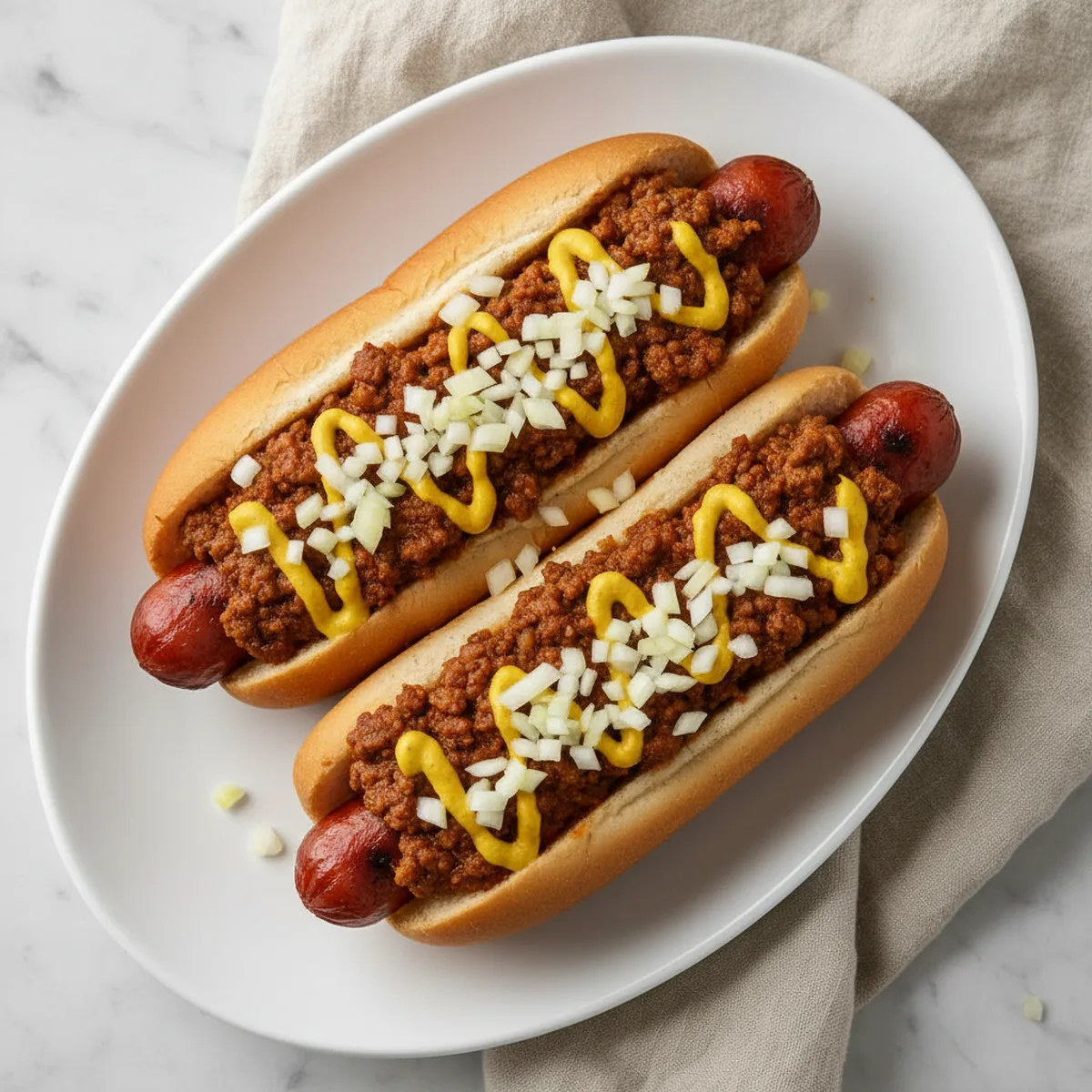
Classic serving: Spoon generously over a steamed or grilled hot dog in a soft bun, topped with a sprinkle of finely diced onion and a drizzle of yellow mustard. Coleslaw on top is the full West Virginia treatment if you want to go all in.
Storage: Cool completely and store in an airtight container in the fridge for up to 4 days. Reheat on the stovetop over medium-low, adding a splash of water to loosen.
Freezing: This freezes beautifully for up to 3 months. Portion into freezer bags, lay flat to freeze, and thaw overnight in the fridge before reheating. I always make a double batch and stash half for last-minute cookouts.
Homemade Hot Dog Sauce
Ingredients
Equipment
Method
- In a large skillet or saucepan, combine the ground beef and water over medium-high heat. Use a whisk to break the beef apart into very fine pieces as the water comes to a simmer.
- Once the beef is fully broken up and no longer pink (about 5-7 minutes), drain off excess liquid if there's a lot, leaving about 1/4 cup in the pan.
- Add the tomato sauce, diced onion, yellow mustard, chili powder, Worcestershire sauce, salt, black pepper, sugar, and garlic powder. Stir well to combine.
- Reduce heat to low and simmer uncovered for 30-45 minutes, stirring occasionally, until the sauce thickens and the flavors meld. The beef should be very fine and the sauce should coat a spoon.
- Taste and adjust salt if needed. If the sauce is too thick, add a tablespoon or two of water until it reaches your desired consistency.
- Serve hot over grilled or steamed hot dogs. Top with diced onion and yellow mustard if desired.
Notes
Frequently Asked Questions
What's the difference between hot dog sauce and chili?
Hot dog sauce is finer, looser, and has no beans or large chunks. The beef is simmered in liquid and broken down until it’s almost creamy, while chili typically has larger meat pieces, beans, and a heavier spice presence. Hot dog sauce is specifically designed to sit on a hot dog without sliding off.
Why do you boil the ground beef instead of browning it?
Boiling the beef in water and breaking it apart with a whisk gives you that signature ultra-fine texture that authentic drive-in sauce is known for. Browning creates larger, firmer crumbles that don’t coat the hot dog the same way. It sounds wrong, but it’s the key to the right mouthfeel.
Can I make hot dog sauce in a slow cooker?
Yes — brown the beef first on the stovetop (or boil and drain it), then transfer everything to a slow cooker on low for 2-3 hours. The texture won’t be quite as fine since you can’t whisk as effectively in a slow cooker, but the flavor develops beautifully.
Can I use ground turkey instead of beef?
Absolutely. Use 93/7 ground turkey and add 1 tablespoon of olive oil to compensate for the lower fat content. The sauce will be slightly lighter in color and flavor, but still delicious. Simmer the same way.
How long does homemade hot dog sauce last?
It keeps in the fridge for up to 4 days in an airtight container, and it actually tastes better on day two. You can also freeze it for up to 3 months — portion it into freezer bags and lay them flat for easy storage.
Leave a Reply