
This gyoza sauce recipe takes four ingredients and about two minutes to throw together — and it tastes exactly like the little dish you get at your favorite Japanese spot. Salty, tangy, a little spicy, with that addictive savory kick that makes dumplings disappear fast.
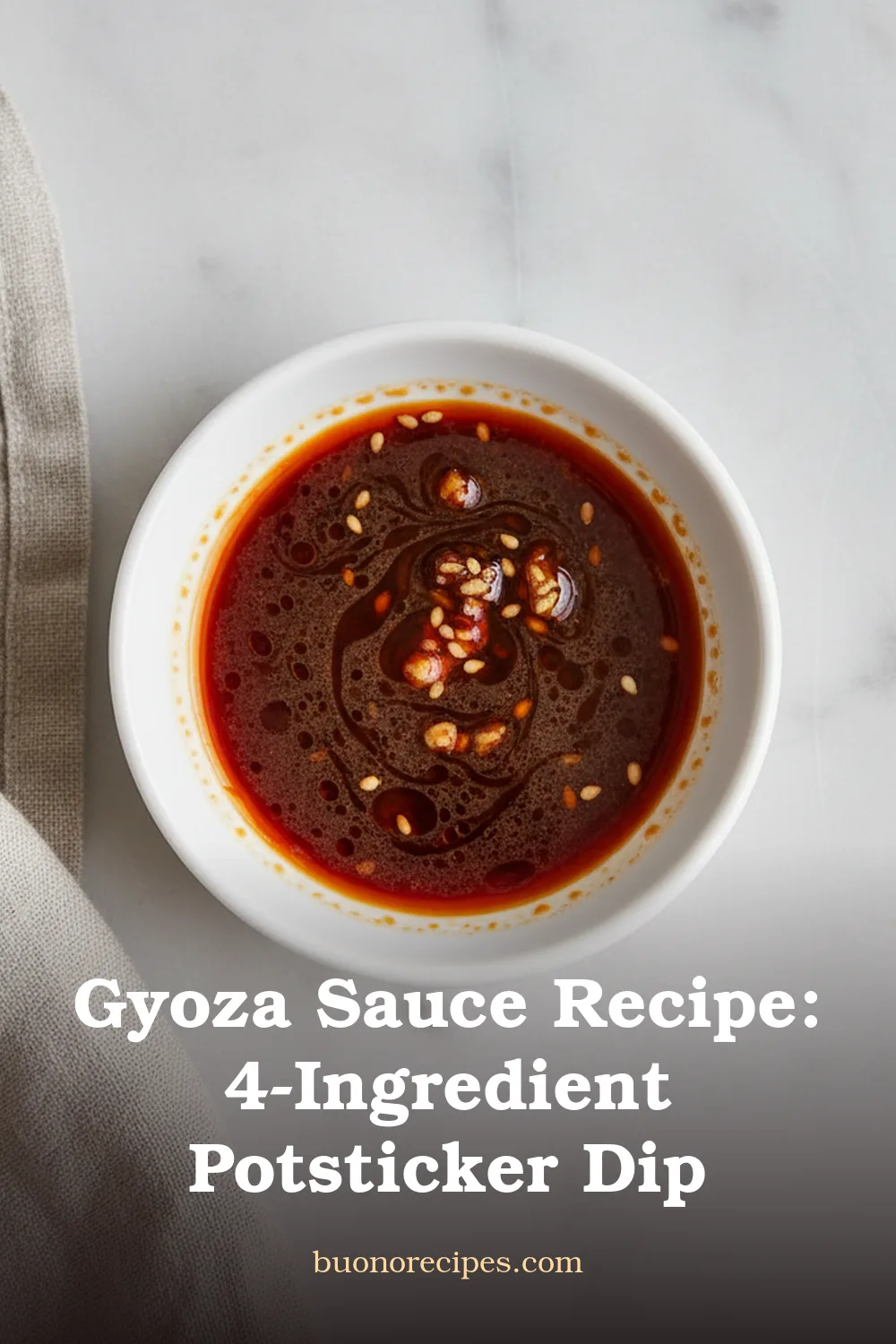
I used to buy the bottled stuff, honestly. Then I ran out one night mid-dumpling-binge and realized I already had everything I needed in the fridge door. Homemade is cheaper, sharper, and you can tweak the heat to your liking.
Keep this gyoza sauce recipe in your back pocket for potstickers, wontons, or even drizzled over rice bowls. It keeps for weeks, so make a double batch.
What Is Gyoza Sauce?
Gyoza sauce is the classic Japanese dipping sauce served alongside gyoza — those crispy-bottomed pan-fried dumplings. It’s a simple blend of soy sauce, rice vinegar, and chili oil or la-yu, sometimes brightened with a touch of sesame oil or grated garlic.
The flavor hits all the right notes: salty and umami from the soy, tangy from the vinegar, and a slow warming heat from the chili oil. It’s not a thick sauce — it’s thin and punchy, designed to cling to the dumpling wrapper without overpowering the filling.
Every restaurant has its own ratio. Some go heavier on vinegar, others crank the spice. Once you know the base, you can dial it to your own taste.
Why This Gyoza Sauce Recipe Works
The magic is in the balance. Too much soy and it’s one-note salty; too much vinegar and it gets harsh. This recipe uses a 2:1 soy-to-vinegar ratio, which lands right in that restaurant-sweet spot.
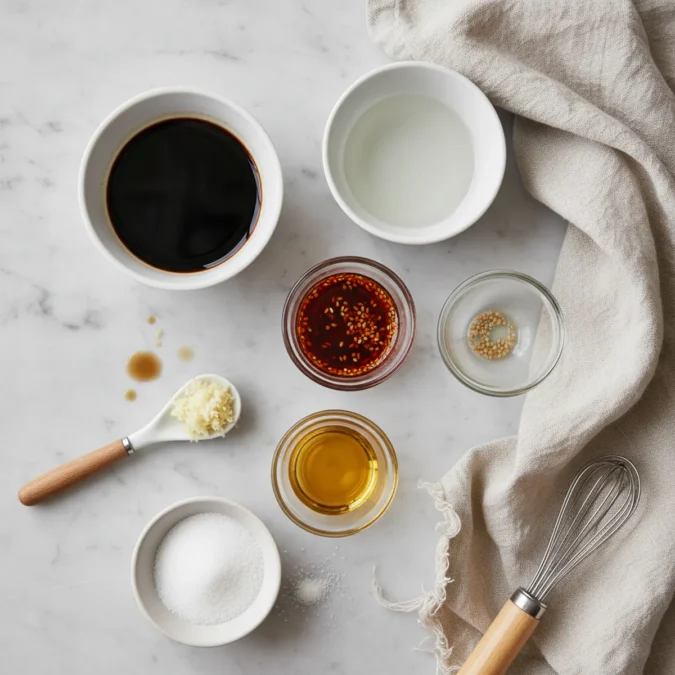
Using Japanese soy sauce (shoyu) instead of standard Chinese soy makes a real difference — it’s slightly sweeter and rounder. If you only have regular soy sauce, a tiny pinch of sugar bridges the gap.
La-yu, the Japanese chili oil with sesame, is the secret ingredient. It brings heat plus toasted sesame depth in one pour. You can find it at most Asian markets or online, and it keeps forever.
Ingredients & Smart Swaps
Keep it simple: soy sauce, rice vinegar, la-yu (Japanese chili oil), and a few drops of toasted sesame oil. That’s the base. A little grated garlic or fresh ginger is optional but lovely if you want extra punch.
Gluten-free? Use tamari instead of soy sauce — it works perfectly and most people can’t tell the difference. For a vegan version, you’re already there; all these ingredients are plant-based.
No la-yu? Substitute your favorite chili oil or a few drops of sriracha plus extra sesame oil. If you only have black vinegar, use it — it's malty and delicious, just slightly different from rice vinegar.
Tips for the Best Dipping Sauce
Mix it at least 10 minutes before serving. The flavors meld and mellow as they sit, so a little patience pays off. If you’re in a rush, just stir longer.
Taste and adjust before serving. Want it spicier? More la-yu. Too salty? A splash of water or extra vinegar. This is your sauce — make it yours.
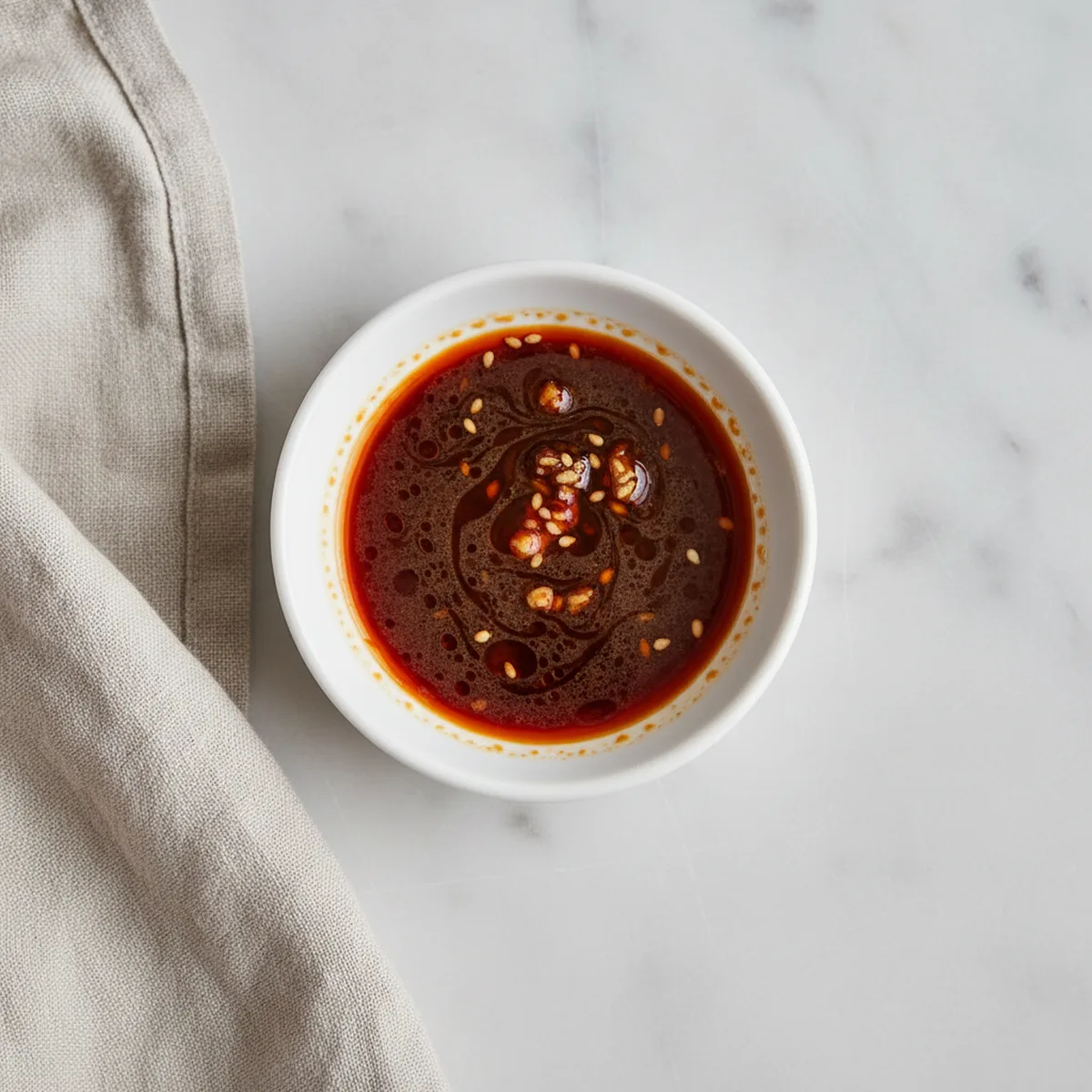
For a restaurant-style presentation, serve it in small shallow dishes with a few sesame seeds or a sprinkle of sliced scallions on top. It looks fancy but takes zero extra effort.
Serving & Storage
This sauce isn’t just for gyoza. Try it with steamed dumplings, edamame, cold noodles, or even as a marinade for grilled chicken thighs. It’s a versatile little workhorse.
Store it in a clean jar or airtight container in the fridge for up to 3 weeks. The flavors actually improve after a day or two. Give it a stir before using — the chili oil likes to settle at the top.
Double the batch if you cook dumplings regularly. It’s handy to have ready, and homemade keeps better than an opened store-bought bottle.
Homemade Gyoza Sauce
Ingredients
Equipment
Method
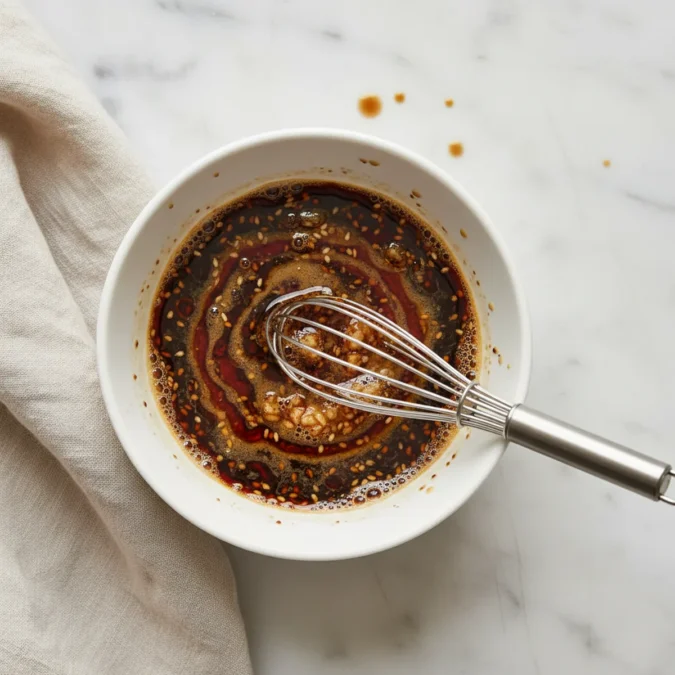
- In a small bowl or jar, combine the soy sauce and rice vinegar. Stir until smooth.
- Add the la-yu, toasted sesame oil, and grated garlic if using. Whisk to combine.
- Taste and adjust — add more la-yu for heat, a splash of vinegar for tang, or a pinch of sugar to round out saltiness.
- Let sit for 10 minutes before serving so the flavors meld. Stir again and serve in small dipping dishes.
Notes
Frequently Asked Questions
Can I make gyoza sauce without la-yu?
Yes — substitute any chili oil you like, or use 1/2 teaspoon sriracha plus an extra 1/4 teaspoon toasted sesame oil. The flavor won’t be identical, but it’ll still be delicious and spicy.
What's the difference between Japanese soy sauce and regular soy sauce?
Japanese soy sauce (shoyu) is brewed with wheat and tends to be slightly sweeter and rounder than Chinese soy sauce. If you only have regular soy sauce, add a small pinch of sugar to mimic that softer edge.
How long does homemade gyoza sauce last?
Stored in an airtight jar in the fridge, it keeps for up to 3 weeks. The flavors actually deepen after a day or two, so making it ahead is a smart move.
Is gyoza sauce gluten-free?
Not by default, since soy sauce contains wheat. Swap in tamari — a gluten-free Japanese soy sauce — and you’re good to go. Everything else in the recipe is naturally gluten-free.
Can I make it less spicy?
Absolutely. Start with 1/4 teaspoon of la-yu, taste, and add more gradually. You can also skip the chili oil entirely for a mild soy-vinegar dip that kids usually love.
Leave a Reply