
It looks like crushed sapphires, tastes like the ocean crossed with a hard candy, and costs about as much as a fancy latte per ounce. Persian blue salt is one of those ingredients that sounds gimmicky until you actually sprinkle it on something warm and watch it transform the whole bite.
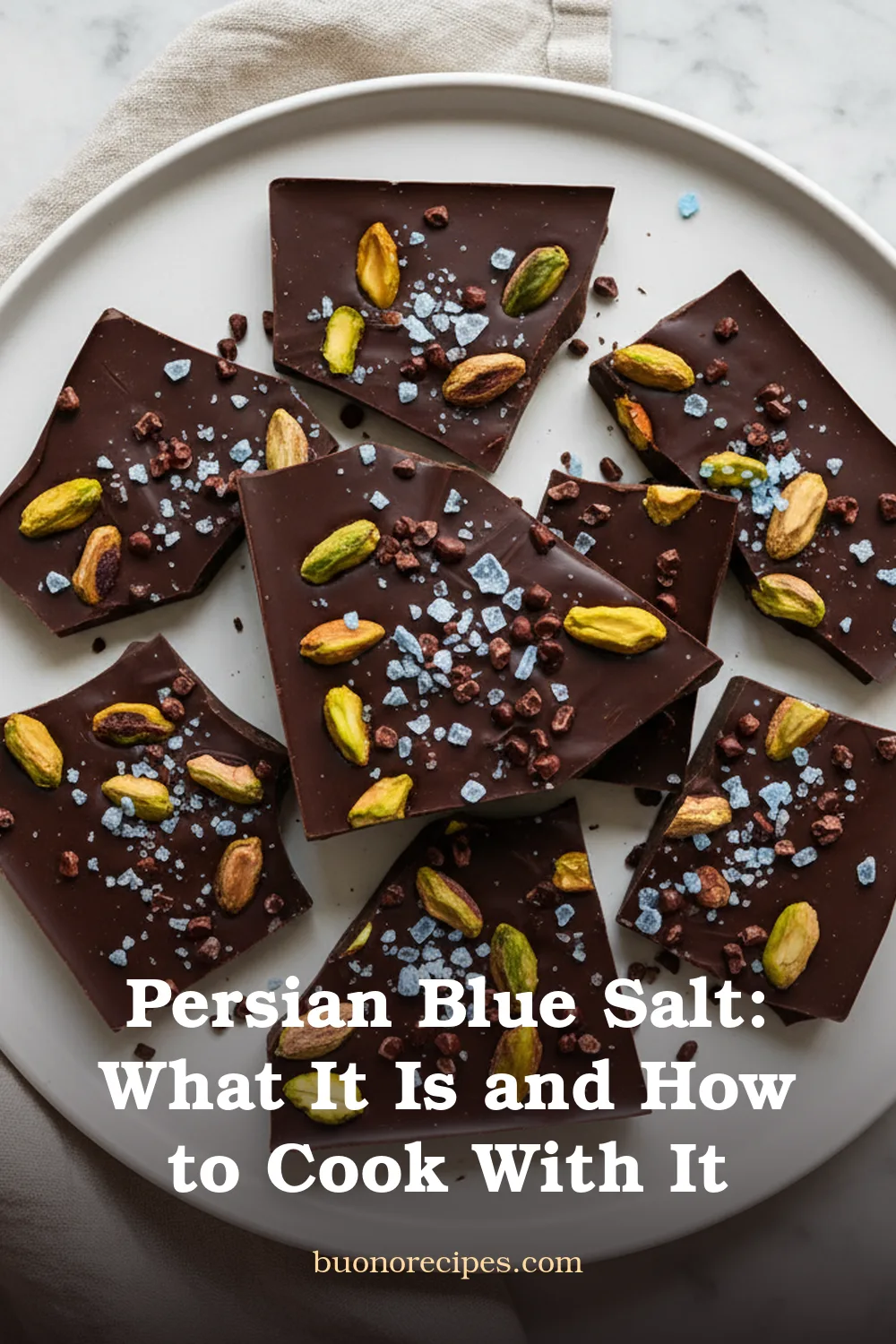
I picked up a small jar on a whim last year, mostly because the color stopped me mid-aisle. What surprised me wasn’t the look — it was the flavor. There’s a quick, almost lemony sharpness up front, then it mellows into a clean, mineral finish that lingers without being harsh. It’s not your everyday cooking salt, and that’s exactly the point.
This guide covers what Persian blue salt actually is, why it works the way it does, and a dead-simple dark chocolate bark recipe that lets those blue crystals do all the talking.
What Is Persian Blue Salt?
Persian blue salt is a rare rock salt mined from ancient salt deposits in northern Iran, primarily in the Semnan province. The striking blue color comes from a natural phenomenon called potassium permanganate crystallization — essentially, the way certain minerals compress under intense geological pressure over millions of years creates a blue tint within the salt crystals.
It’s not dyed, and it’s not mixed with anything artificial. The blue is faint and patchy, not a solid electric blue — so if you see salt that’s aggressively, uniformly blue, that’s a red flag. Real Persian blue salt looks more like a pale, icy blue-gray with flecks of deeper blue scattered through it. Some crystals barely look blue at all until the light hits them right.
The flavor is what sets it apart from other finishing salts. It has a slightly sharp, almost sour edge at first — some people describe it as a faint lemon or licorice note — followed by a clean mineral finish. That initial sharpness is what makes it interesting on rich, fatty, or sweet foods where a flat salt would just disappear.
Why This Recipe Works
Dark chocolate bark is the ideal showcase for Persian blue salt because the salt’s sharp, mineral edge cuts straight through the bitterness and fat of the chocolate. You get the snap of the chocolate, the melt, and then those blue crystals hit with a bright pop that lingers. It’s a three-second flavor journey in a single bite.
The recipe itself is almost embarrassingly simple — melt, spread, sprinkle, chill. But that simplicity is deliberate. When you’re working with a salt that costs more per ounce than the chocolate, you don’t want to bury it under a pile of other ingredients. You want a neutral, high-quality canvas that lets the salt be the star.
I’ve tested this with 70% and 85% chocolate, and both work. The 70% gives you enough sweetness to balance the salt’s sharpness, while 85% leans more sophisticated and lets the salt’s mineral notes really sing. Go with whatever you actually enjoy eating plain.
Ingredient Notes
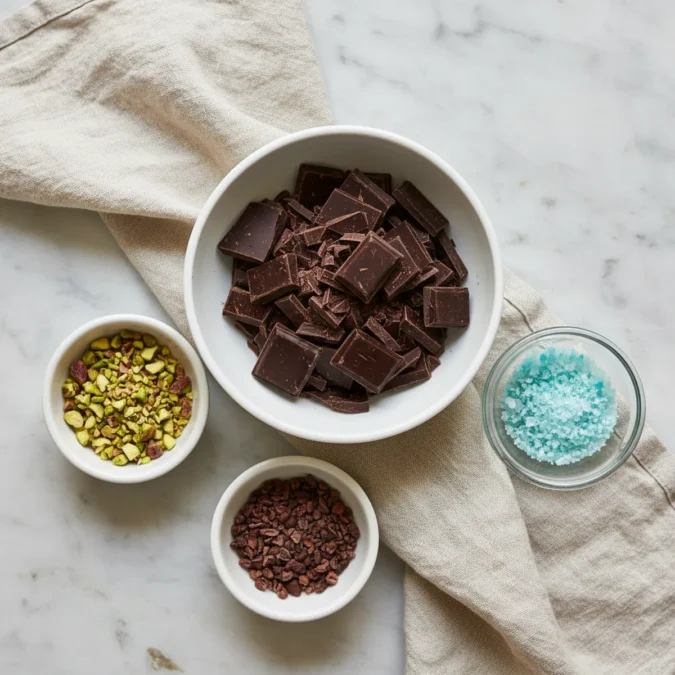
Persian blue salt: You’ll find it online from specialty spice shops and some gourmet grocers. A little goes a long way — a 1-ounce jar will last you months if you use it as a finishing salt only. Store it in an airtight container away from moisture, and it’ll keep indefinitely. Don’t cook with it or dissolve it in liquid; the color fades and you lose the textural contrast that makes it special.
Dark chocolate: Use bars, not chips. Chocolate chips have stabilizers that prevent them from melting smoothly. Chop the bars yourself for even melting. Look for chocolate in the 70–85% range — anything sweeter and the salt gets lost.
Optional toppings: A handful of toasted pistachios or cacao nibs adds texture without competing with the salt. Keep it minimal. The salt is the headline act here.
Ingredient Swaps
Vegan: This recipe is naturally vegan as long as you use dairy-free dark chocolate. Most 70%+ dark chocolate is already vegan, but check the label for milk fat or butterfat.
Gluten-free: Also naturally gluten-free. No swaps needed.
No Persian blue salt? If you can’t find it or don’t want to spend the money, flaky Maldon sea salt is the best substitute. You won’t get the blue color or the sharp mineral edge, but you’ll still get that satisfying crunch and clean salt finish. Himalayan pink salt works too, though it’s milder and sweeter.
Keto-friendly: Dark chocolate bark with 85% chocolate is already very low in sugar and keto-compatible. Just skip any sweetened toppings.
Tips for the Best Bark
Temper the chocolate if you want it glossy and shelf-stable, but honestly, for home snacking, a simple melt-and-chill works fine. The bark will be a little softer and may bloom (get whitish streaks) after a day or two, but it still tastes great. If you’re gifting it, tempering is worth the extra step.
Don’t add the salt until the chocolate has set slightly but is still tacky — about 10 minutes into chilling. If you sprinkle it on while the chocolate is fully liquid, the crystals sink and disappear. If you wait until it’s fully hard, the salt won’t stick. That tacky window is your sweet spot.
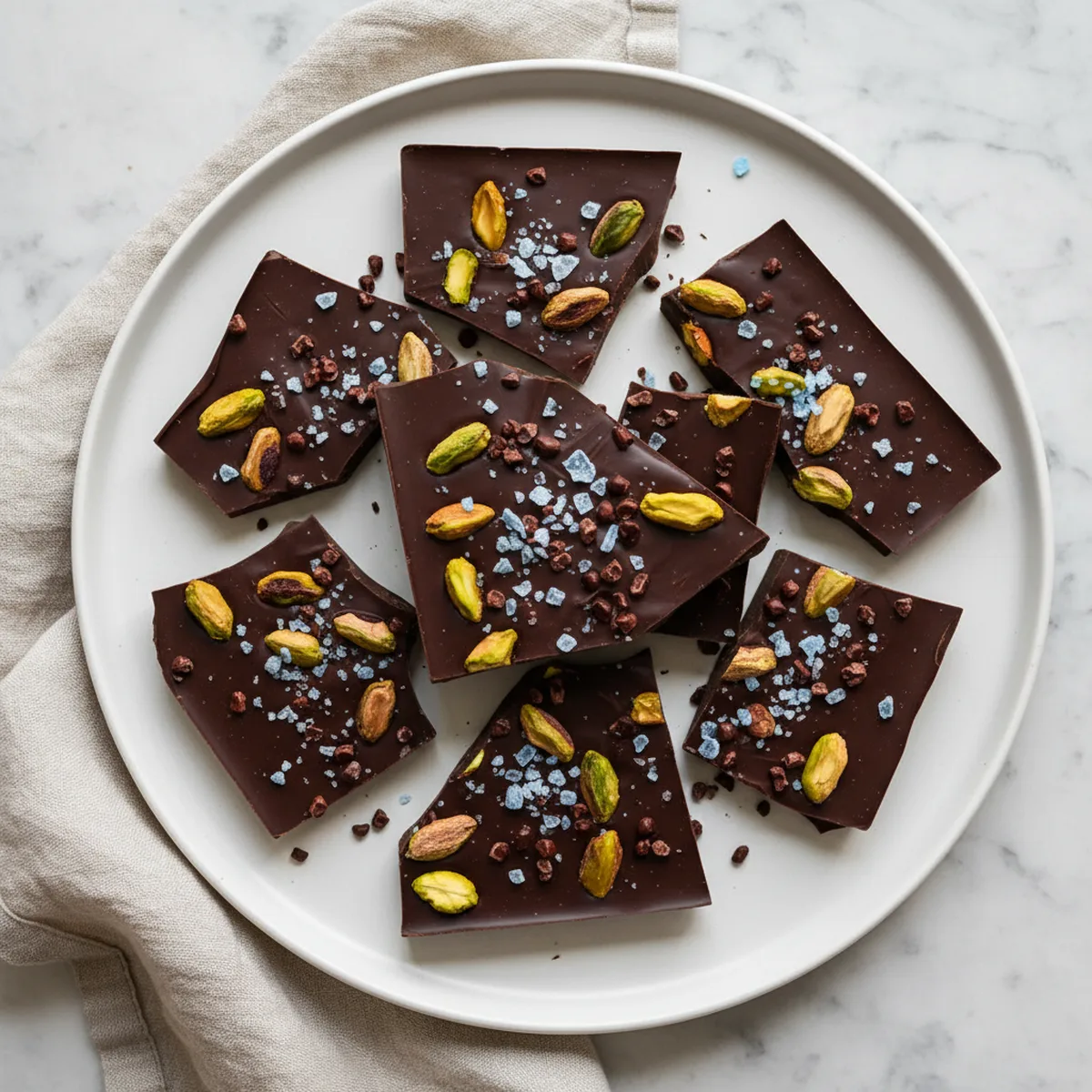
Break the bark into irregular pieces rather than cutting it into neat squares. The ragged edges look more like something from a chocolate shop, and they give you more surface area for salt per bite.
Serving and Storage
Serve the bark at room temperature on a simple plate or in a small bowl alongside coffee or espresso after dinner. The bitterness of the coffee mirrors the chocolate and makes the salt’s sharpness pop even more. It also makes a genuinely impressive edible gift — just stack pieces in a small tin with parchment between layers.
Store the bark in an airtight container at room temperature for up to two weeks, or in the fridge for a month. If you refrigerate it, let it come to room temperature before serving — cold chocolate dulls the flavor and the salt won’t register the same way. Keep it away from heat and humidity, which will cause blooming and soften the texture.
Freezing isn’t recommended. The condensation that forms when you thaw frozen chocolate will dissolve the salt crystals, and you’ll lose the visual effect that’s half the point of using Persian blue salt in the first place.
Dark Chocolate Bark with Persian Blue Salt
Ingredients
Equipment
Method
- Line a baking sheet with parchment paper.
- Place the chopped chocolate in a microwave-safe bowl. Microwave in 30-second bursts, stirring between each, until just melted and smooth. Alternatively, melt over a double boiler on low heat.
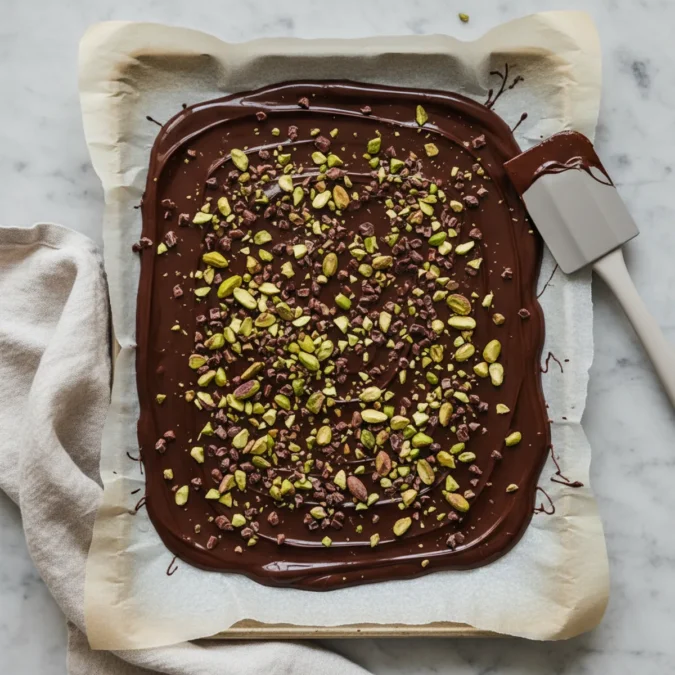
- Pour the melted chocolate onto the parchment and use a spatula to spread it into an even layer about 1/4 inch thick.
- If using pistachios or cacao nibs, scatter them now while the chocolate is still liquid. Gently press them in with the spatula.
- Chill the baking sheet in the refrigerator for 10 minutes, or until the chocolate is set but still slightly tacky on the surface.
- Sprinkle the Persian blue salt evenly over the top. Press very lightly with your fingertips to help the crystals adhere.
- Return to the fridge for another 20–30 minutes until fully set.
- Break into irregular pieces by hand or with a knife. Serve at room temperature.
Notes
Frequently Asked Questions
What does Persian blue salt taste like?
It has a sharp, slightly sour edge up front — almost like a faint lemon or licorice note — followed by a clean, mineral finish. It’s less aggressively salty than table salt and more complex than flaky sea salt, which is why it works so well as a finishing salt on rich or sweet foods.
Can I cook with Persian blue salt instead of regular salt?
You can, but it’s a waste. The blue color fades when dissolved, and you lose the textural crunch that makes it special. Save it for finishing — sprinkling on top of food right before serving — where the color and crystal structure actually matter.
Where do I buy Persian blue salt?
Look for it online from specialty spice shops like The Spice House, Burlap & Barrel, or gourmet food retailers. Some high-end grocery stores carry it in small jars. Expect to pay more than you would for everyday salt, but a little goes a long way since you only use it as a finishing salt.
Is Persian blue salt the same as Himalayan pink salt?
No. They come from different regions, have different mineral compositions, and taste noticeably different. Himalayan pink salt is milder and sweeter, while Persian blue salt has that signature sharp, mineral edge. They’re both finishing salts, but they’re not interchangeable in flavor.
How long does Persian blue salt last?
Indefinitely, as long as you keep it in an airtight container away from moisture. Salt doesn’t go bad. The color may fade slightly over years if exposed to light, so a dark container or a spot in the pantry is your best bet.
Leave a Reply