
A proper mornay sauce is just béchamel with cheese melted in — but that one addition turns a plain white sauce into something rich, glossy, and genuinely luxurious. It’s the golden blanket on eggs Florentine, the thing that makes a gratin worth eating, and honestly, a pretty great dip for stale bread at 11 p.m.
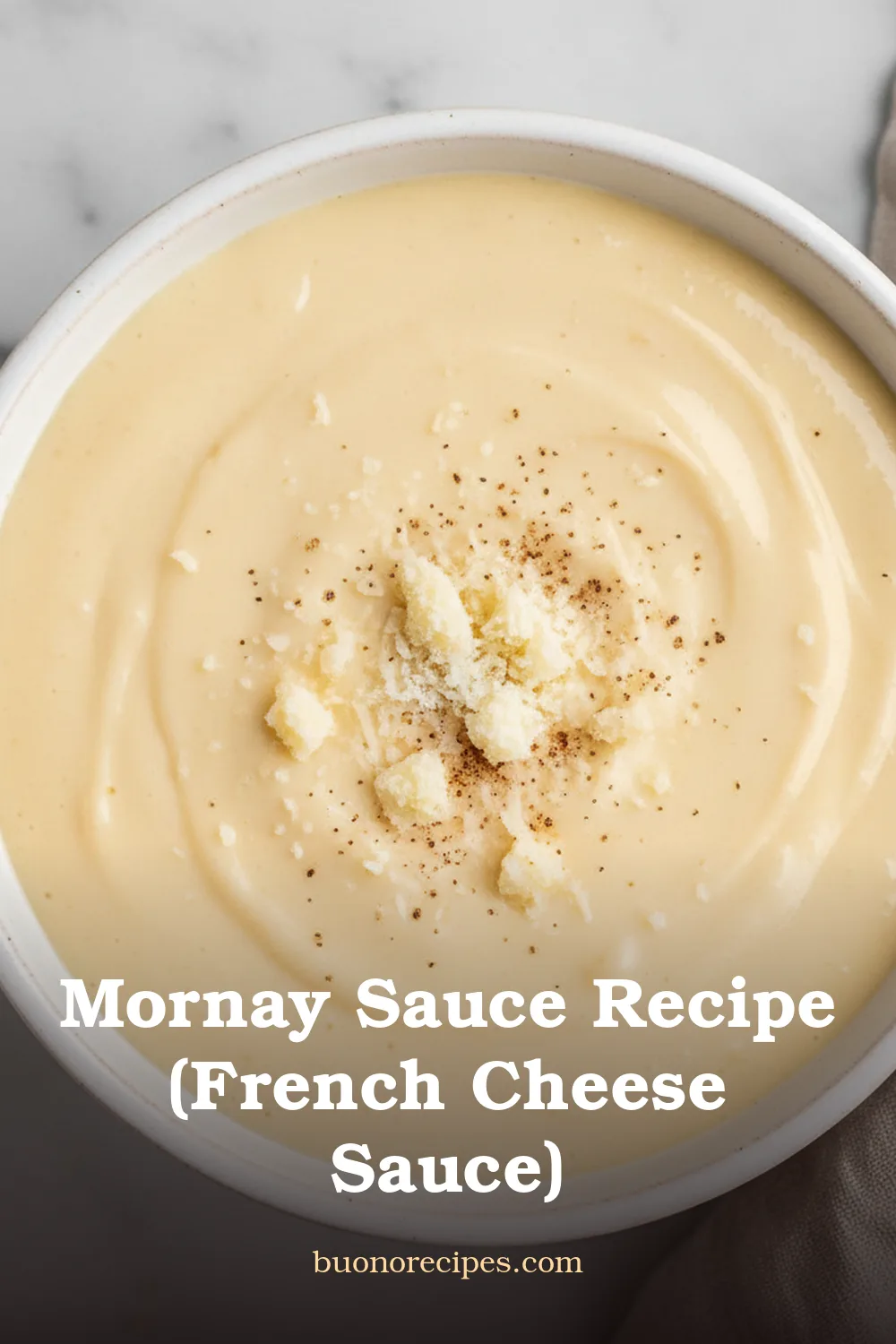
This mornay sauce recipe takes about 15 minutes start to finish, uses pantry staples, and fixes the two things that usually go wrong: grainy cheese and lumpy roux. The trick is temperature — cold milk into hot roux, and off-heat cheese. I learned the hard way that dumping Gruyère into a boiling sauce gives you cheese soup with oil slicks.
Once you nail it, you’ll find excuses to put it on everything. Roasted vegetables, baked pasta, leftover chicken. It keeps a few days in the fridge and reheats like a dream.
What Is Mornay Sauce?
Mornay sauce is a classic French secondary sauce built on béchamel — one of the five mother sauces. You make a roux of butter and flour, whisk in milk until smooth, then fold in cheese until it melts into a silky, pourable sauce. That’s it. The cheese is what separates mornay from béchamel.
Traditionally it’s a mix of Gruyère and Parmesan, but the sauce is flexible by nature. It’s the foundation of eggs Florentine, croque monsieur, and countless gratins. Think of it as the French answer to cheese sauce — lighter and more refined than a nacho cheese, but just as comforting.
Why This Mornay Sauce Recipe Works
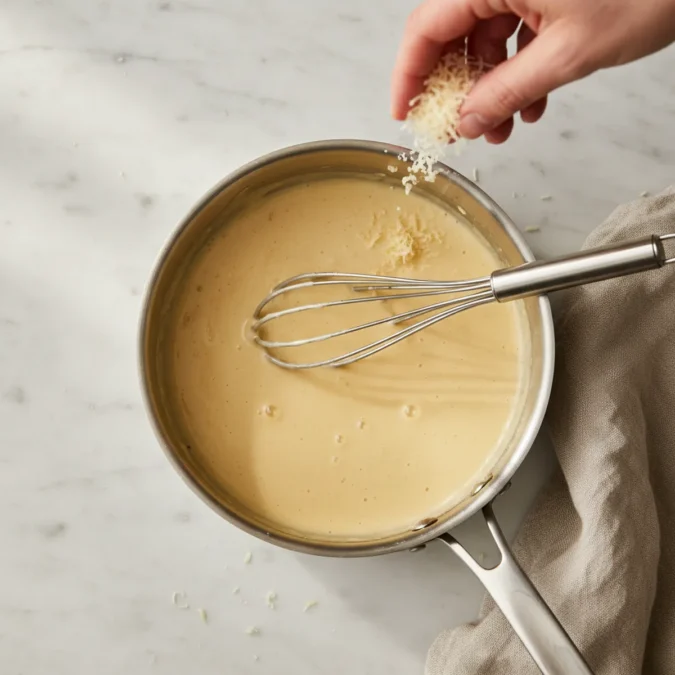
The biggest failure point is cheese that breaks or gets grainy. That happens when cheese hits a violently hot, boiling sauce. This recipe pulls the pan off the heat before the cheese goes in, letting residual heat melt it gently. You get a smooth, glossy sauce every time.
The roux is cooked just long enough to lose its raw flour taste but not so long it darkens — we want a pale, blond roux for a white sauce. Whisking the milk in gradually (and warm, not cold) prevents lumps from forming in the first place. A splash more milk at the end adjusts thickness, because cheese thickness varies and so does preference.
Ingredient Notes
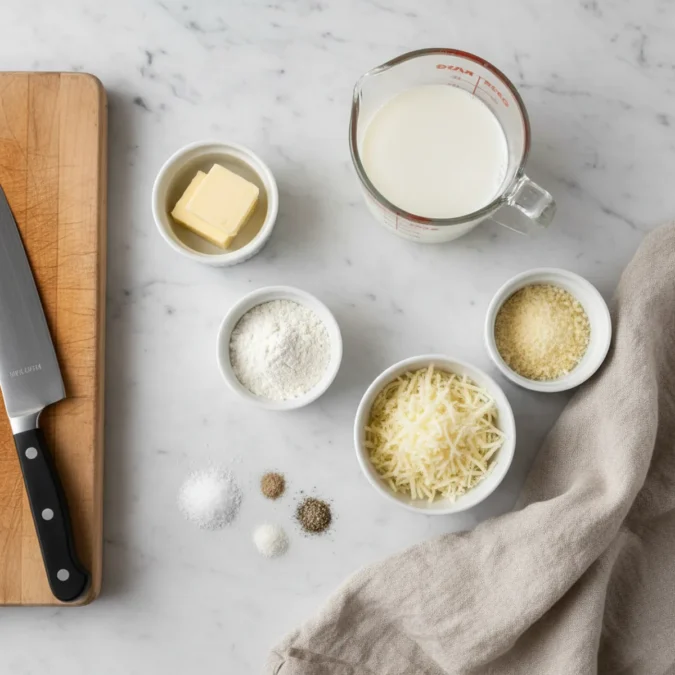
Butter: Unsalted, so you control the salt. The cheese and Parmesan bring a lot of salt on their own.
Flour: All-purpose. The roux ratio here is 1:1 butter to flour by weight-ish (2 tablespoons each), which gives a medium-thick sauce. If you want it pourable for drizzling, add another 1/4 cup milk at the end.
Milk: Whole milk gives the best texture. 2% works in a pinch; skim will give you a thinner, less rich sauce. Warm the milk slightly — cold milk shocks the roux and encourages lumps.
Cheese: Gruyère is classic for its nutty, melty quality. A sharp white cheddar or fontina are good substitutes. Always grate from a block — pre-shredded cheese is coated in anti-caking starch and won’t melt smoothly. The Parmesan adds salty depth; use the real stuff, not the green can.
Ingredient Swaps & Dietary Options
Gluten-free: Swap the flour for a 1:1 gluten-free blend or cornstarch (use 1 tablespoon cornstarch instead of 2 tablespoons flour, mixed with a splash of cold milk before adding). The sauce will be slightly glossier with cornstarch but still excellent.
Vegan: Use vegan butter, oat or unsweetened soy milk, and a good melting vegan cheese (violife or follow your heart work). Add a pinch of nutritional yeast to compensate for the umami you lose from Parmesan.
Keto/Low-carb: Skip the flour entirely. Use 1 tablespoon cream cheese and 1/4 cup heavy cream to thicken instead, then add the cheese. It won’t be a traditional mornay, but it’ll be rich and cheese-forward.
Cheese variations: Swap Gruyère for fontina, Comté, raclette, or even smoked Gouda for a twist. Keep the Parmesan for depth unless you’re going fully different.
Tips for a Smooth Sauce
Grate your own cheese. This is non-negotiable for texture. Pre-shredded bags will give you a grainy, weird sauce and you’ll blame the recipe.
Off-heat melting. Once the sauce has thickened on the stove, pull it off the burner before adding cheese. Residual heat melts it perfectly. If it needs more heat, put it back on low for 10 seconds — never a boil.
Whisk, don’t stir. A whisk breaks up roux lumps as you add milk. A wooden spoon won’t do the same job.
Season at the end. Taste after the cheese is in — Parmesan is salty and you may not need additional salt. A pinch of white pepper and a tiny grating of nutmeg are traditional and worth it.
Serving Ideas & Storage
Serving: Spoon it over eggs Florentine or eggs Benedict, use it in a croque monsieur or croque madame, pour over roasted broccoli or cauliflower, fold into baked pasta, or use as a dip for crusty bread and roasted potatoes.
Storage: Cool completely and refrigerate in an airtight container up to 4 days. It will thicken into a paste — that’s normal. To reheat, warm gently in a saucepan over low heat with a splash of milk, whisking until smooth. Microwave works in 20-second bursts but stovetop gives better texture.
Freezing: You can freeze it for up to 2 months, but the texture may separate slightly on thaw. Reheat low and slow with extra milk and vigorous whisking. Fresh is always better.
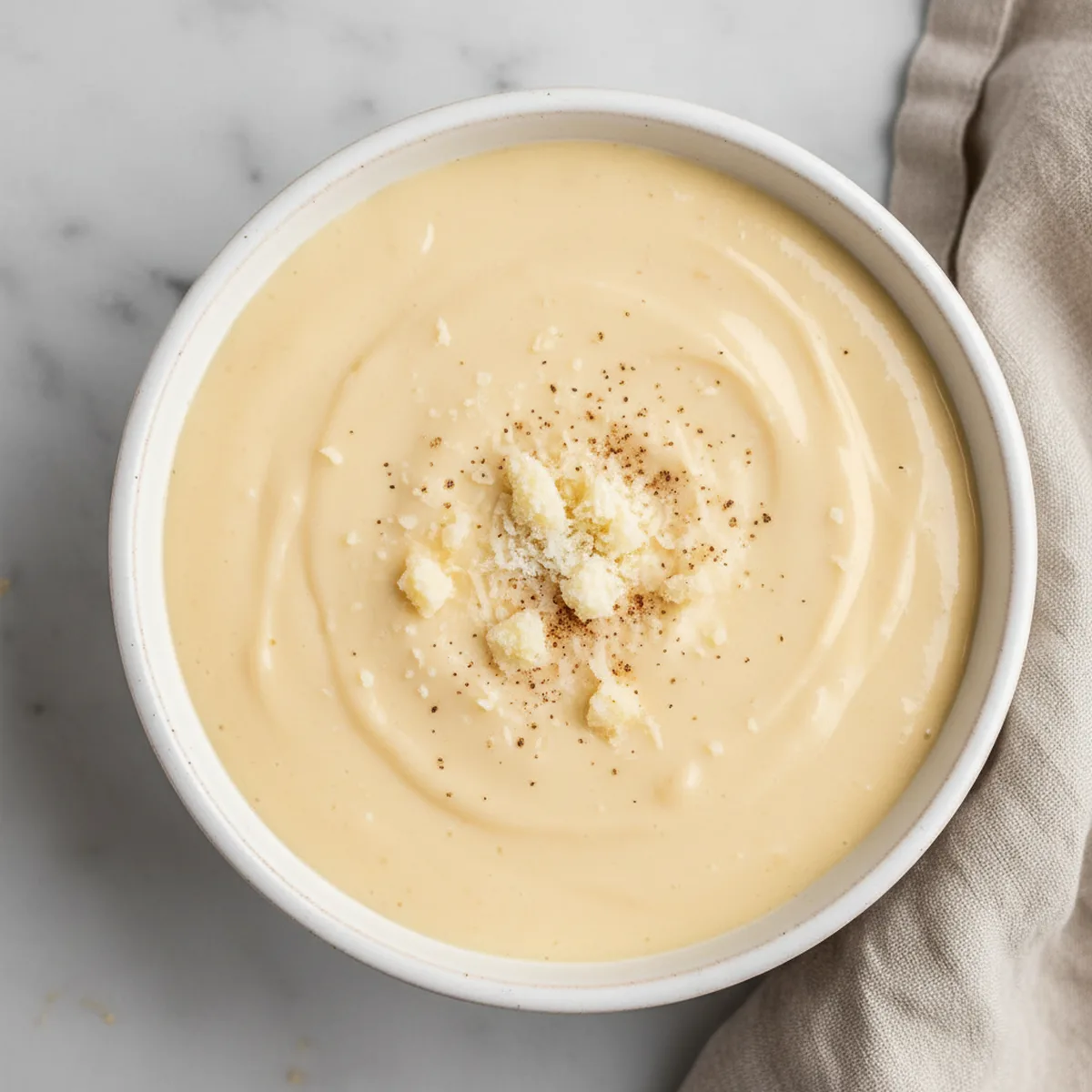
Mornay Sauce
Ingredients
Equipment
Method
- In a small saucepan over medium heat, melt the butter until foaming but not browned.
- Add the flour and whisk constantly for 1-2 minutes until the mixture is pale golden and smells nutty — this cooks out the raw flour taste.
- Gradually pour in the warm milk, whisking constantly to prevent lumps. Continue whisking until smooth.
- Bring to a gentle simmer, whisking frequently, and cook for 3-4 minutes until the sauce thickens enough to coat the back of a spoon.
- Remove the pan from the heat. Add the Gruyère and Parmesan, a handful at a time, whisking gently until each addition melts before adding the next.
- Season with salt, white pepper, and nutmeg. Taste and adjust — you may not need much salt because the Parmesan is salty.
- If the sauce is too thick, whisk in a splash of warm milk until it reaches your desired consistency. Serve immediately.
Notes
Frequently Asked Questions
What's the difference between mornay sauce and béchamel?
Béchamel is a white sauce made from butter, flour, and milk. Mornay sauce is béchamel with cheese added — traditionally Gruyère and Parmesan. So mornay is just a cheese-enriched béchamel. Same base, one extra step.
Can I make mornay sauce ahead of time?
Yes. It keeps up to 4 days in the fridge. It’ll thicken into a paste, which looks alarming but is totally normal. Reheat gently over low heat with a splash of milk and whisk until smooth. Don’t let it boil or the cheese can separate and get greasy.
Why did my mornay sauce turn out grainy?
Usually two culprits: pre-shredded cheese (coated in anti-caking starch) or cheese added to a boiling sauce. Always grate from a block, and pull the pan off the heat before adding cheese. The residual heat melts it gently without breaking the emulsion.
Can I use cheddar instead of Gruyère?
Absolutely. A sharp white cheddar gives a more pronounced flavor and melts well. Fontina, Comté, or raclette also work. Keep the Parmesan for depth unless you’re going for a fully different flavor profile. Just grate it yourself — that’s the real secret to smoothness.
Is mornay sauce the same as cheese sauce?
It’s a type of cheese sauce, but more refined than a typical American cheese sauce. Mornay starts with a classic French béchamel base, so it’s silkier and less sharp than a nacho-style sauce. It’s meant to be elegant — the kind of thing you pour over eggs Florentine, not tortilla chips.
Leave a Reply