
That little puddle of creamy, slightly sweet white sauce they hand you at the hibachi grill? You can make it at home in five minutes with stuff already in your fridge.
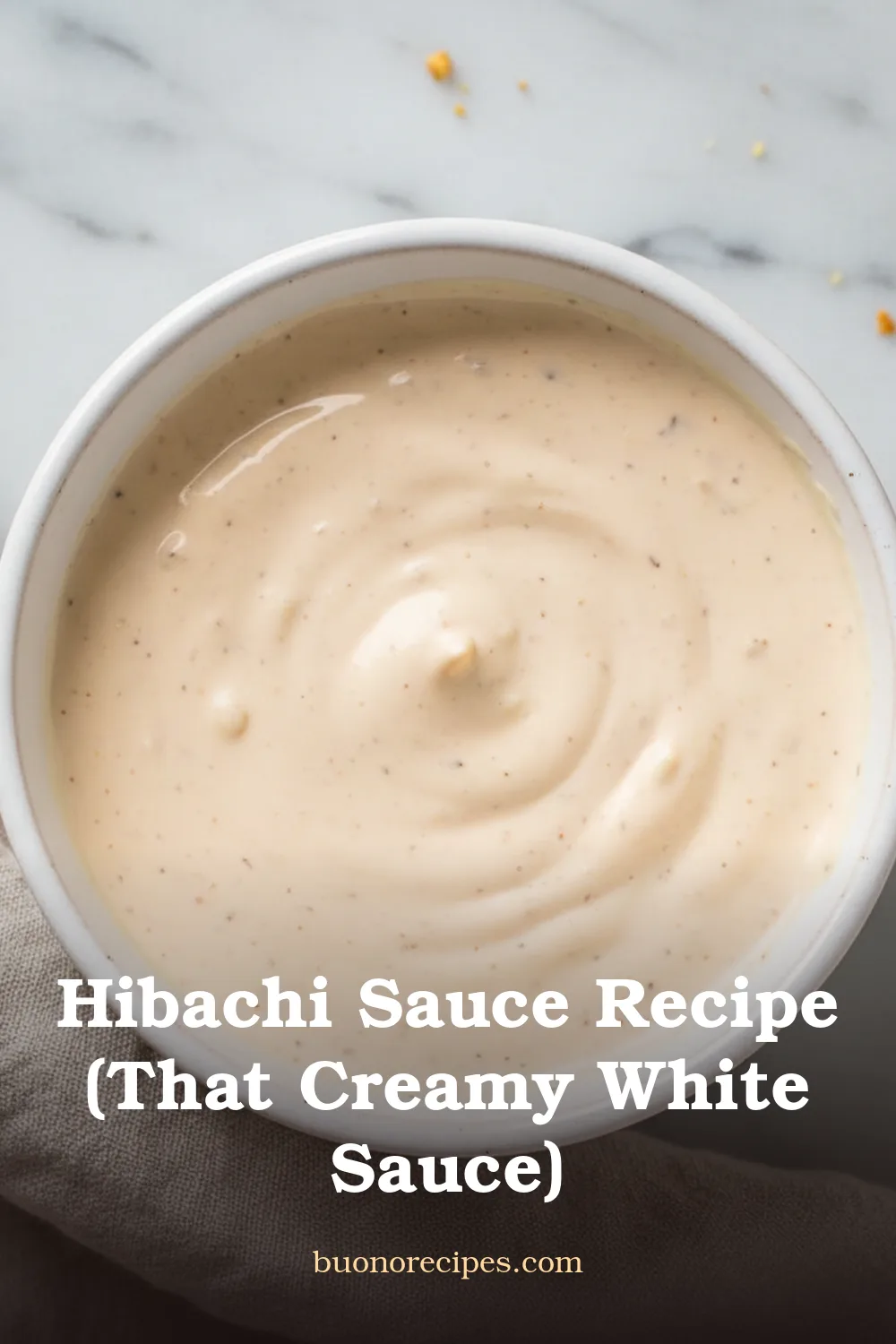
This hibachi sauce recipe is a dead ringer for the yum yum sauce you’d get at Benihana or your local Japanese steakhouse — mayo-based, tangy, a little garlicky, with a whisper of tomato and smoke. Once you mix a batch, you’ll start putting it on everything from fried rice to roasted broccoli.
The trick is letting it rest. Mix it, walk away for an hour, and the flavors melt together into something that tastes shockingly like the real thing.
What Is Hibachi Sauce?
Hibachi sauce — also called yum yum sauce or Japanese white sauce — is the creamy, pale orange condiment served at teppanyaki restaurants in the US. It’s not traditional Japanese; it’s an American hibachi invention that became the whole reason some of us go.
The base is mayonnaise, thinned with water and brightened with rice vinegar, tomato paste, garlic, and a touch of sugar. It’s mild, creamy, and faintly sweet — basically engineered to pair with grilled meat and fried rice.
Why This Hibachi Sauce Recipe Works
Most copycat recipes overcomplicate things or skip the resting step, which is where the magic happens. Freshly mixed, it tastes like seasoned mayo. After an hour in the fridge, the garlic softens, the tomato paste mellows, and everything blends into that familiar restaurant flavor.
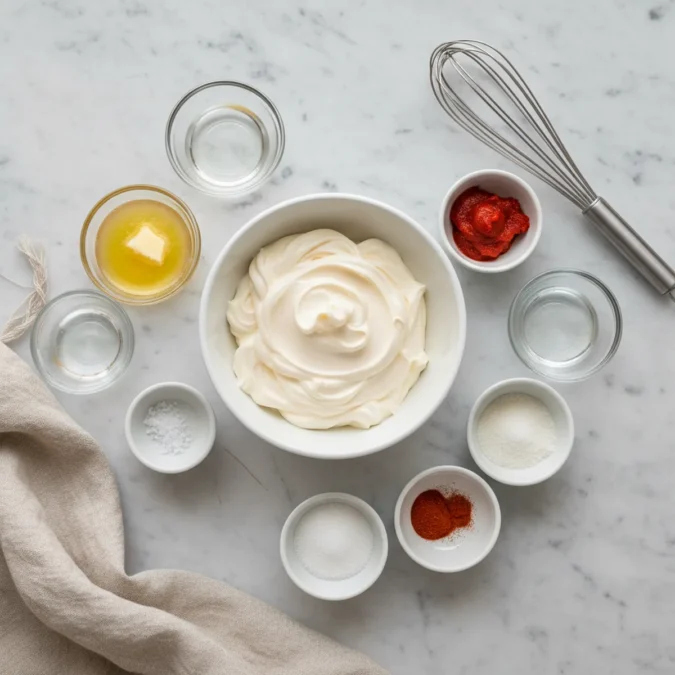
I’ve tested this with Kewpie, Hellmann’s, and Duke’s — they all work, but Kewpie gets you closest to the authentic hibachi taste because of its extra yolk and umami. Regular American mayo is totally fine if that’s what you have.
Ingredients Notes
Use full-fat mayo. Low-fat or whipped mayo breaks down and gets watery when you thin it — not worth it.
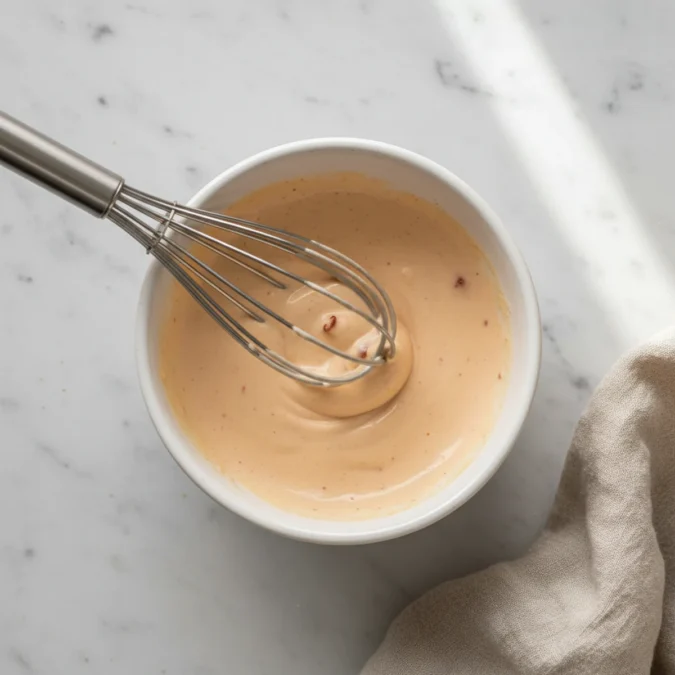
Tomato paste, not ketchup. Ketchup has too much vinegar and sugar and throws the balance off. A small spoon of tomato paste gives you that subtle pink-orange color without making it taste like a burger topping.
Paprika adds color and a hint of smoke. Smoked paprika works if you want a slightly grilled flavor; sweet paprika keeps it mellow. Garlic powder is better than fresh garlic here because raw garlic gets harsh and spicy as it sits.
Ingredient Swaps & Diet Options
Gluten-free: This recipe is naturally gluten-free as written — just double-check your mayo and paprika labels.
Vegan: Use a vegan mayo like Vegenaise. The flavor is slightly different but still creamy and delicious. Swap the butter for a vegan alternative if you’re using it.
Keto-friendly: Replace the sugar with a pinch of monk fruit sweetener or skip it entirely. The carb count drops to almost nothing.
No rice vinegar? Substitute apple cider vinegar or white wine vinegar in the same amount.
Tips for the Best Hibachi Sauce
Whisk well or use a small blender. Tomato paste likes to clump — whisk aggressively or use a milk frother to get it smooth.
Rest it. I know I’m repeating myself, but this is the single most important step. Thirty minutes minimum, one hour ideal. The garlic powder needs time to hydrate and mellow.
Adjust the thickness. If it’s too thick, add water a teaspoon at a time. It should be dippable but not runny — think the consistency of ranch dressing.
Serving & Storage
Serve with hibachi-style chicken, steak, shrimp, fried rice, or roasted vegetables. It’s also excellent as a sandwich spread or drizzled over a rice bowl.
Store in an airtight container in the fridge for up to one week. Do not freeze — mayo-based sauces separate and get grainy when frozen.
Make a double batch. It disappears fast, especially if you live with sauce grazers who “just want a taste” every time they open the fridge.
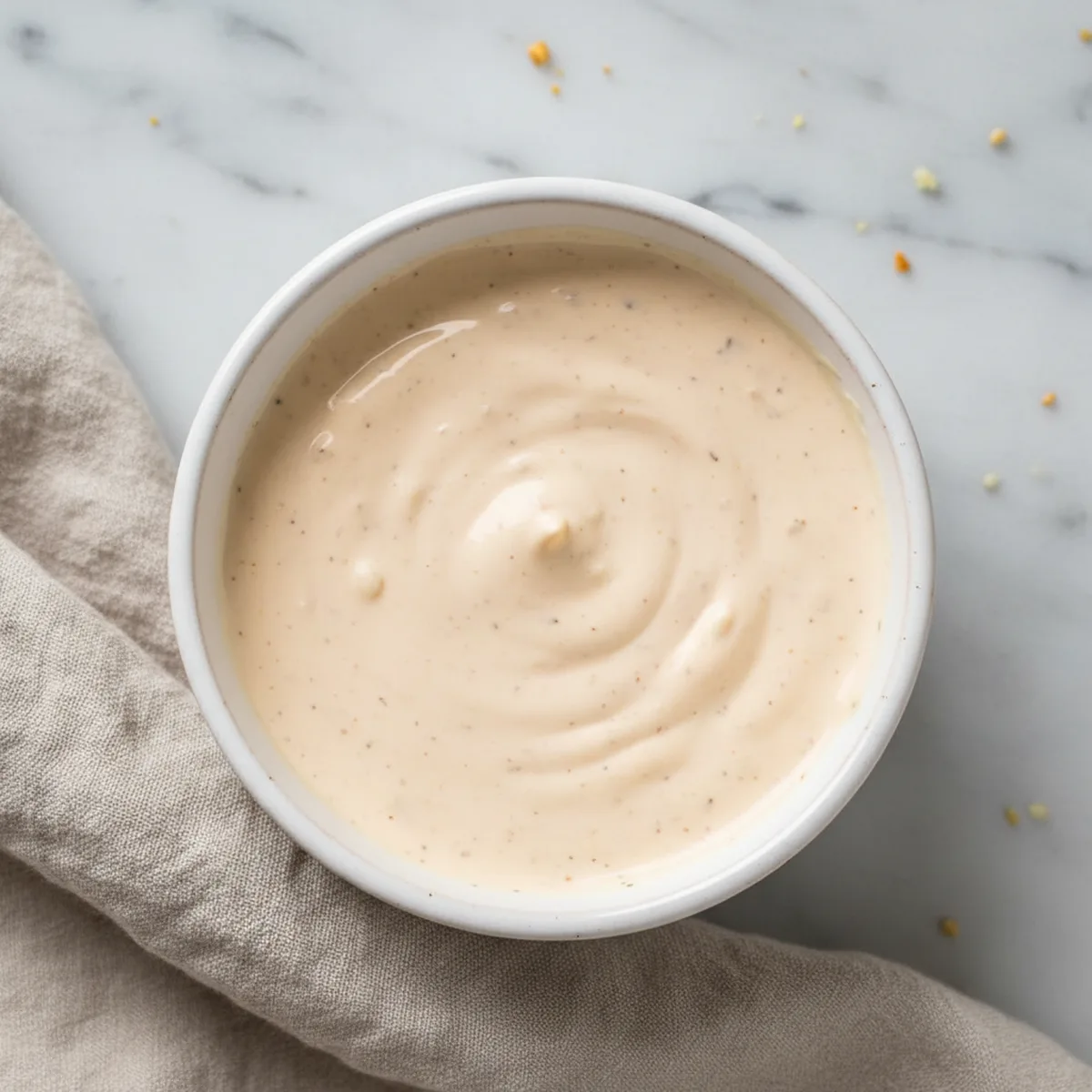
Hibachi Sauce (Yum Yum Sauce)
Ingredients
Equipment
Method
- In a small bowl, combine the mayonnaise, tomato paste, rice vinegar, sugar, garlic powder, paprika, and onion powder.
- Whisk until completely smooth with no tomato paste clumps remaining.
- Add the melted butter if using, and whisk again.
- Add water one tablespoon at a time, whisking after each addition, until the sauce reaches a dippable, ranch-like consistency.
- Taste and add salt if needed — start with a small pinch.
- Cover and refrigerate for at least 30 minutes, preferably 1 hour, before serving.
Notes
Frequently Asked Questions
What is hibachi sauce made of?
It’s a mayonnaise-based sauce thinned with water and flavored with tomato paste, rice vinegar, garlic powder, sugar, and paprika. Despite the name, it’s an American hibachi restaurant creation, not traditional Japanese.
Is hibachi sauce the same as yum yum sauce?
Yes — hibachi sauce, yum yum sauce, and Japanese white sauce all refer to the same creamy, pale orange condiment served at teppanyaki restaurants in the US.
How long does homemade hibachi sauce last?
Stored in an airtight container in the fridge, it keeps for up to 7 days. The flavors actually improve after the first day as the garlic powder hydrates and mellows.
Can I use ketchup instead of tomato paste?
I don’t recommend it. Ketchup adds too much vinegar and sugar, which throws off the flavor balance. Tomato paste gives you the color and subtle tomato note without overpowering the sauce.
Why does my hibachi sauce taste flat?
It probably needs more resting time. Let it sit in the fridge for at least an hour — the garlic powder needs time to hydrate. If it still tastes flat after resting, add a small pinch of salt or a few drops more rice vinegar.
Leave a Reply