
This burger sauce recipe gives you that creamy, tangy, slightly sweet magic that makes a homemade burger taste like it came from your favorite fast-food joint — maybe better, because you control the salt and the quality.
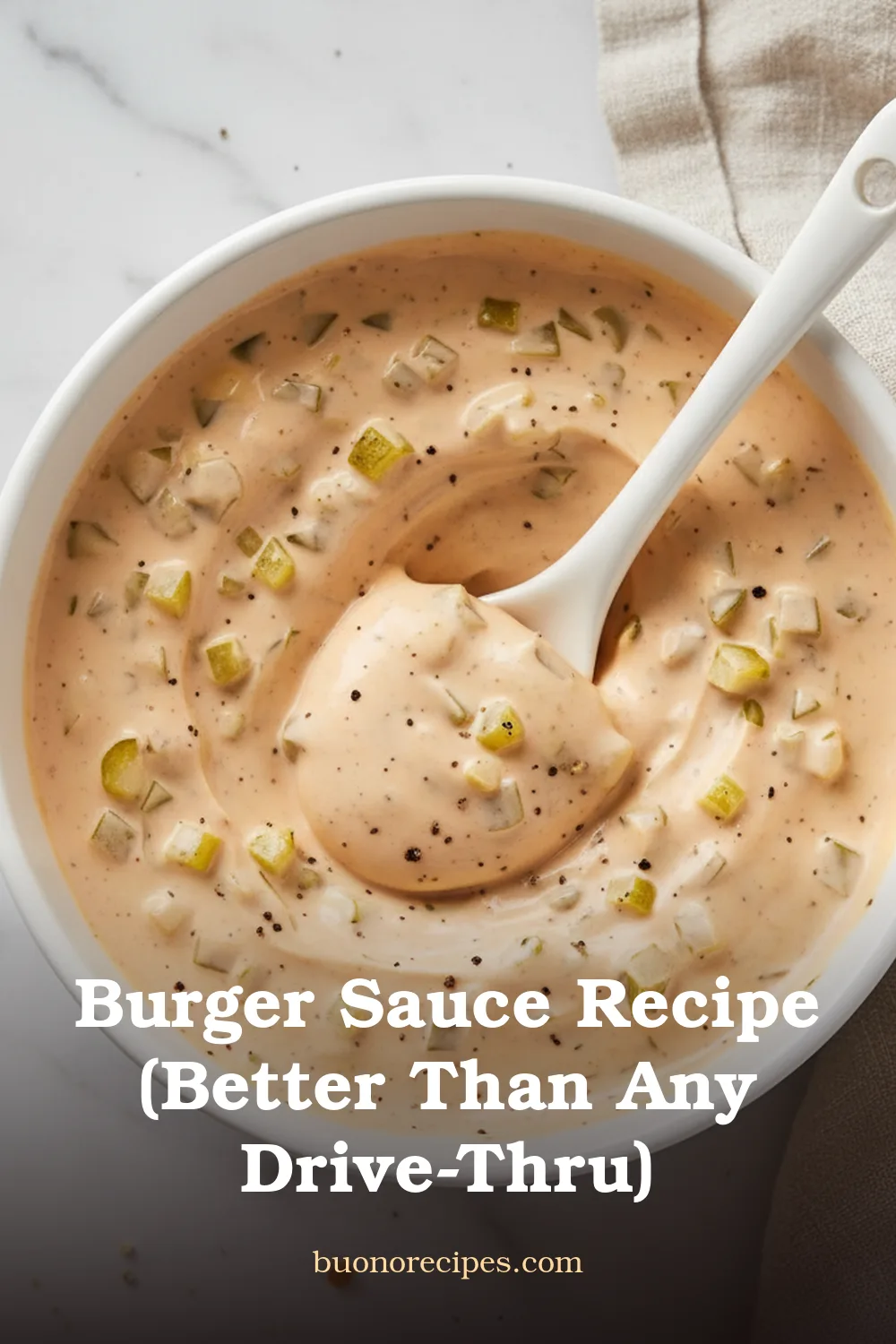
I started mixing this up years ago after one too many dry backyard burgers, and now it’s the thing friends actually request when we fire up the grill. It takes five minutes, uses pantry staples, and lives in the fridge for a week ready to slather on everything.
The trick is balancing mayo’s richness with pickle tang, a hit of mustard, and just enough smoked paprika to make it interesting. Once you make it, you’ll stop buying the bottled stuff for good.
What Is Burger Sauce?
Burger sauce is that creamy, tangy condiment that sits somewhere between Thousand Island dressing and special sauce — the stuff restaurants slather on buns to make burgers unforgettable. It’s mayo-based, punched up with pickles, mustard, ketchup, and spices.
The flavor profile is rich and creamy up front, then tangy from pickles and vinegar, with a subtle sweetness and a whisper of smoke. Think of it as the ultimate all-purpose burger companion.
Every chain has their version, but the homemade route lets you dial the tang, sweetness, and spice exactly to your taste. This burger sauce recipe leans classic but includes easy tweaks if you like it sweeter, spicier, or more tangy.
Why This Recipe Works
Most copycat burger sauce recipes just dump mayo, ketchup, and relish together and call it a day. That’s fine, but it misses depth. This version builds layers: the mustard adds sharpness, smoked paprika brings a subtle grill-like note, and a tiny pinch of sugar rounds everything out.
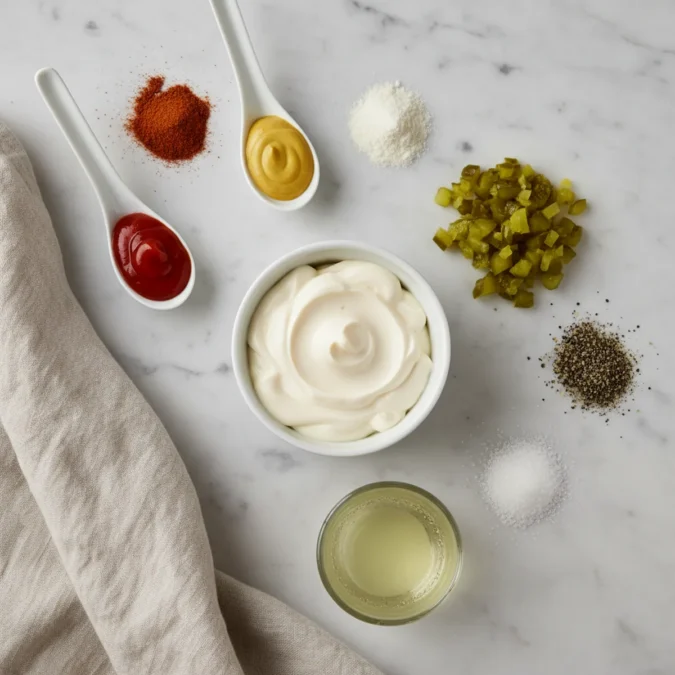
The texture matters too. Finely chopping the pickles instead of using relish gives you little pops of crunch without turning the sauce into a chunky mess. A splash of pickle juice thins it just enough for drizzling.
It also keeps beautifully. Make it Sunday, use it through the week on burgers, fries, sandwiches, and even as a dip for roasted vegetables. The flavors actually deepen after a day in the fridge.
Ingredients Notes
Use full-fat mayonnaise here — the low-fat versions break down and get watery. Duke’s, Hellmann’s, or Kewpie all work great; just pick one you actually like the taste of.
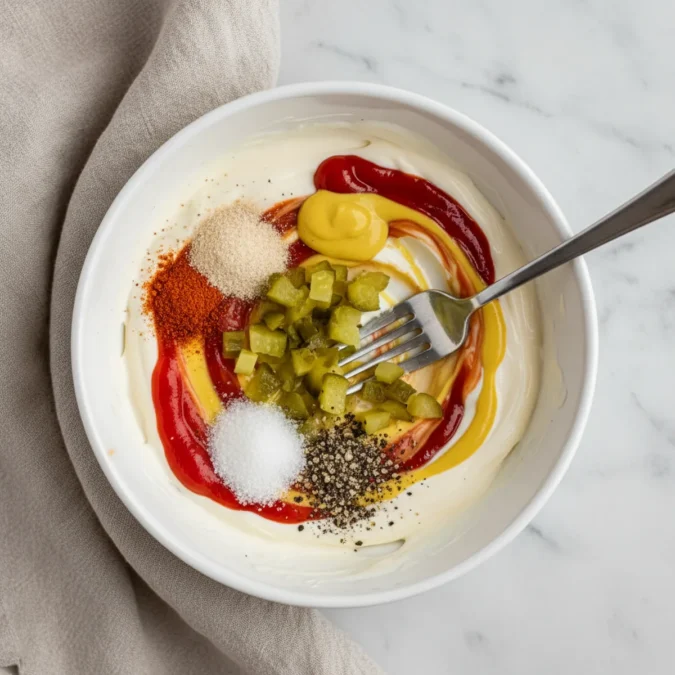
Dill pickles are traditional, but bread-and-butter pickles make a sweeter sauce if that’s your jam. Either way, chop them small and save the juice — you’ll need a tablespoon.
Yellow mustard is classic, but Dijon works if you want a sharper, more grown-up bite. Smoked paprika is the secret ingredient that makes this taste like it came off a grill, not a lab. Don’t skip it.
Ingredient Swaps & Dietary Options
Gluten-free: This recipe is naturally gluten-free as written. Just double-check your mayo and mustard labels to be safe.
Vegan: Swap the mayo for a good vegan mayo (Vegenaise or Sir Kensington’s vegan are solid). Everything else is already plant-based.
Keto/Low-carb: Replace the ketchup with a sugar-free ketchup or a teaspoon of tomato paste plus a pinch of erythritol. Skip the sugar entirely — the pickle juice adds enough tang.
Spicy version: Add 1 teaspoon of hot sauce or ½ teaspoon of chipotle powder. A minced jalapeño also works if you want fresh heat and texture.
Tips for the Best Burger Sauce
Let it rest. This sauce tastes noticeably better after 30 minutes in the fridge because the flavors meld. If you can make it the day before, even better.
Taste and adjust. Mayo brands vary in tanginess, and pickles vary in sweetness. After mixing, taste it — add more pickle juice if it’s too thick, more sugar if it’s too sharp, more paprika if it tastes flat.
Don’t overmix. Stir just until combined. Over-whipping can make the mayo loosen up and get runny. Use a fork, not a blender.
Serving & Storage
This sauce is a workhorse. Slather it on burgers (obviously), but also try it on fried chicken sandwiches, as a dip for fries or onion rings, drizzled over roasted potatoes, or even as a spread for deli sandwiches.
Store it in an airtight jar in the fridge for up to a week. It does not freeze well — mayo separates when thawed, so skip that. If it separates slightly in the fridge, just give it a stir.
Double the batch if you’re feeding a crowd. A single recipe covers about four burgers generously, but it disappears fast once people start dipping fries in it.
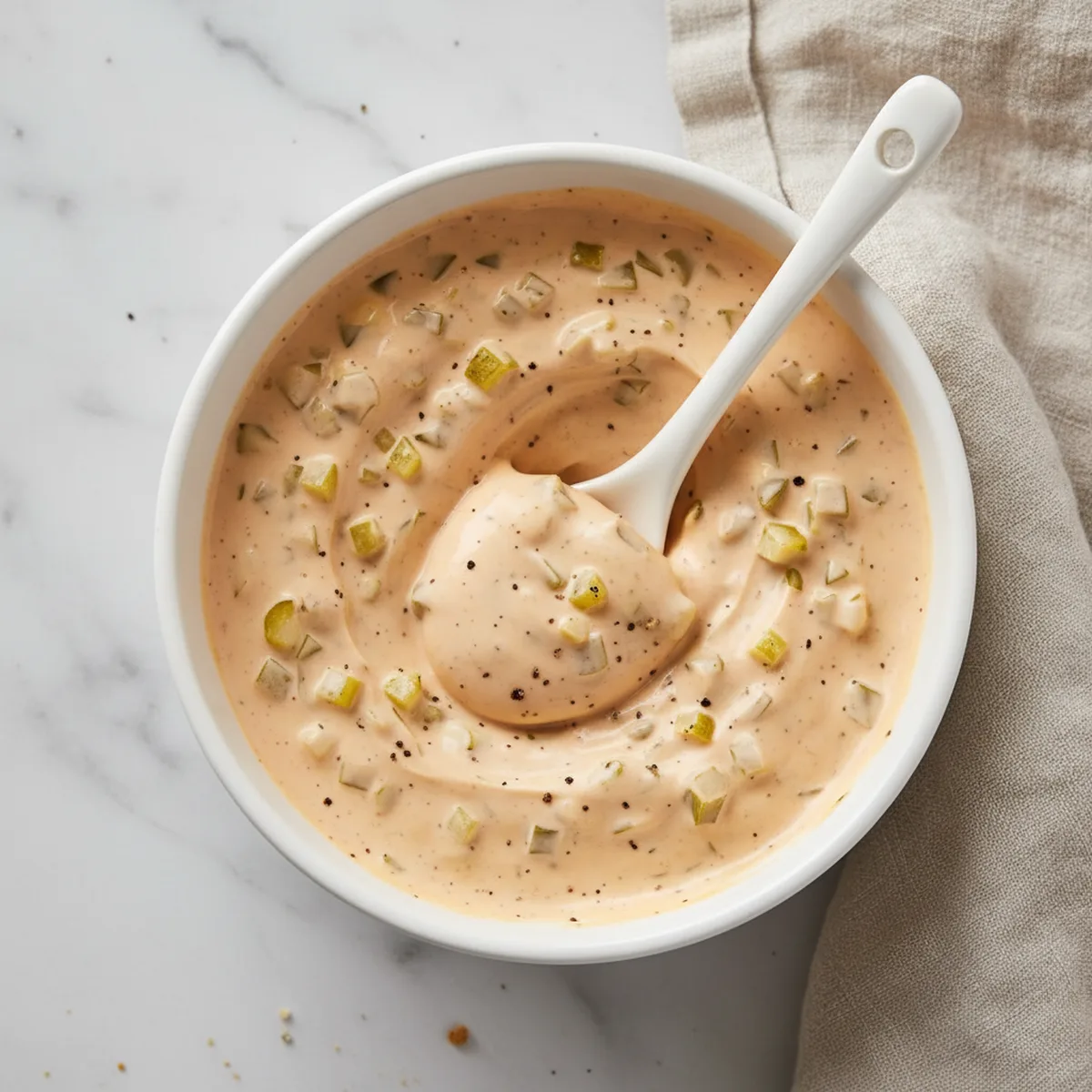
Homemade Burger Sauce
Ingredients
Equipment
Method
- In a small mixing bowl, combine the mayonnaise, ketchup, yellow mustard, and pickle juice. Stir with a fork until smooth.
- Add the finely chopped dill pickles, smoked paprika, onion powder, garlic powder, sugar, and black pepper. Stir gently until everything is evenly distributed — don't overmix.
- Taste and adjust: add more pickle juice if you want it tangier or thinner, more sugar if it's too sharp, or more paprika if it tastes flat.
- Transfer to an airtight jar and refrigerate for at least 30 minutes before serving so the flavors meld. Serve on burgers, fries, or sandwiches.
Notes
Frequently Asked Questions
How long does homemade burger sauce last in the fridge?
It keeps for up to 7 days in an airtight jar. The flavors actually improve after the first day, so making it ahead is a smart move. Just give it a stir before serving.
Can I use sweet pickle relish instead of chopping pickles?
Yes, but drain it well first — relish is wetter and will make the sauce runny. Use about 1 tablespoon of drained relish and skip the sugar, since relish is already sweet.
What's the difference between burger sauce and Thousand Island dressing?
They’re cousins. Thousand Island usually has hard-boiled egg and is more dressing-like, while burger sauce is thicker, tangier, and built to cling to a patty. This recipe leans classic burger sauce — no egg, just creamy tang.
Can I make this without ketchup?
You can, but you’ll lose the subtle sweetness and color. Substitute with 1 teaspoon of tomato paste plus 1/2 teaspoon of sugar, or just leave it out for a tangier, more mayo-forward sauce.
Is this burger sauce gluten-free?
Yes, this recipe is naturally gluten-free as written. Just verify your mayo and mustard labels to be safe, since some brands process with wheat.
Leave a Reply