
This garlic cream sauce recipe is the one I reach for when dinner needs to feel a little fancy without actually being work. It’s silky, garlicky, a little tangy from Parmesan, and comes together in one pan in about ten minutes — no roux, no whisking arm workout, no weird ingredients.
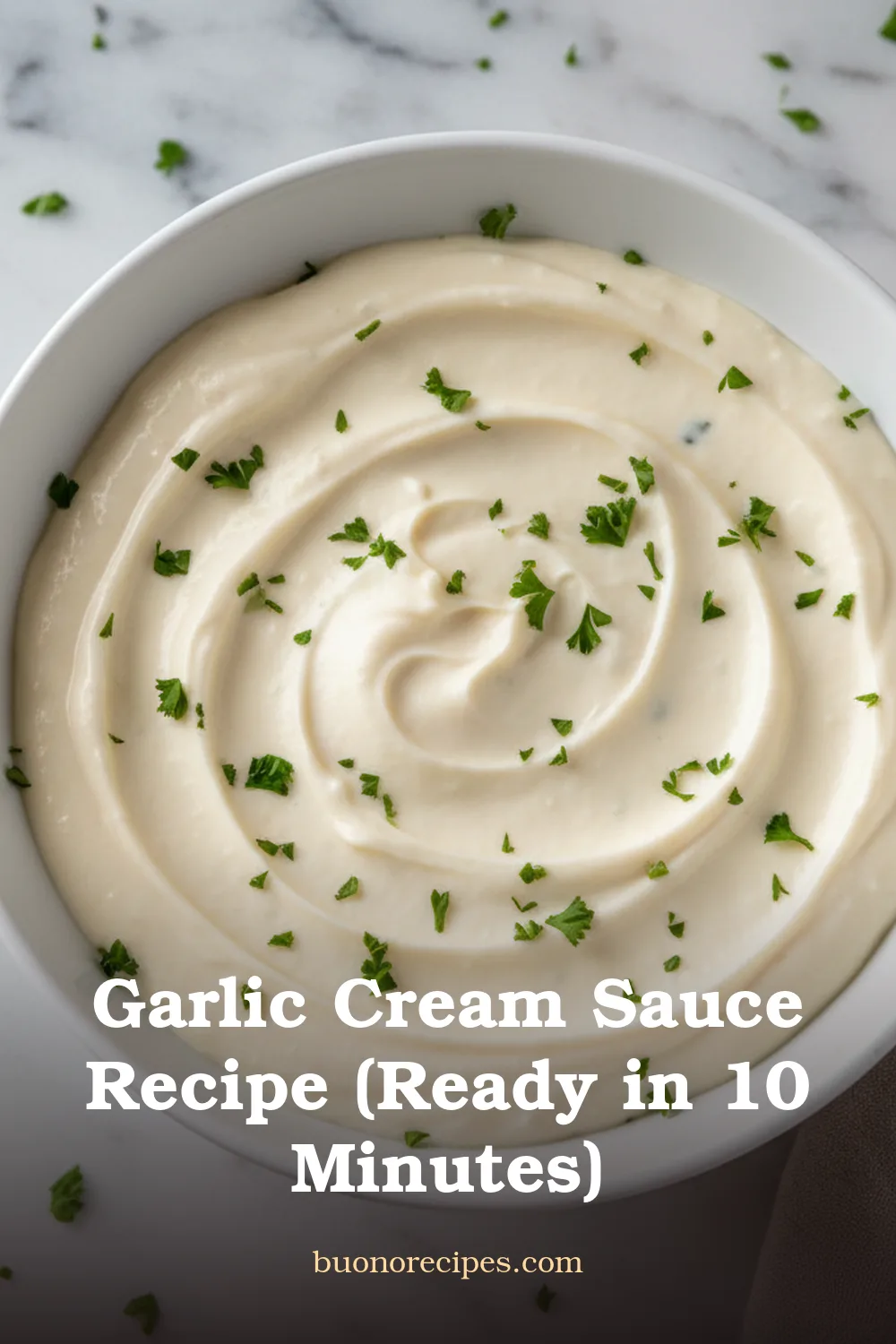
I started making this back in college when I realized a jar of Alfredo cost almost five bucks and tasted like salt and sadness. Once you learn the basic method — sweat garlic in butter, add cream, reduce, finish with cheese — you’ll never go back to the jar.
Pour it over pasta, drizzle it on chicken, dunk crusty bread in it. This is the kind of sauce that makes whatever you cooked look intentional.
What Is Garlic Cream Sauce?
Garlic cream sauce is a simple pan sauce built on three things: butter, garlic, and heavy cream, usually finished with Parmesan for salt and depth. It’s not quite Alfredo (less cheese, looser) and not quite a bechamel (no flour), which makes it faster and more forgiving than either.
You’ll see versions of it all over Italian-American cooking, often spooned over fettuccine, chicken breasts, or seafood. The appeal is obvious — it’s rich without being heavy, and the garlic carries the whole thing.
The trick is treating the garlic gently. Burn it and the sauce turns bitter in a heartbeat. Sweat it low and slow and you get that sweet, mellow flavor that makes people go back for seconds.
Why This Recipe Works
Most garlic cream sauce recipes either overcomplicate things (roux! cornstarch! three kinds of cheese!) or underdeliver (watery, bland, breaks in the pan). This version hits the middle: stable enough to hold, loose enough to coat pasta beautifully.
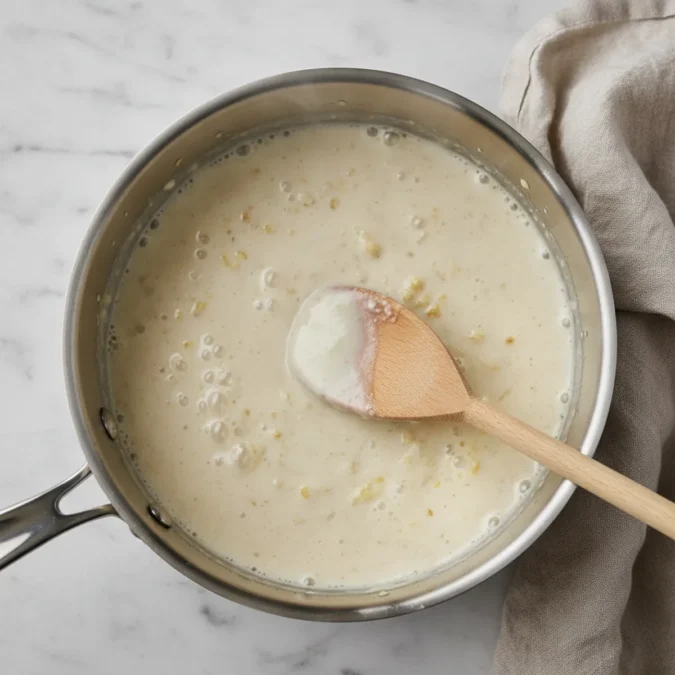
The key is reducing the cream by about a third before adding the cheese. That concentrates the flavor and thickens the sauce naturally, so you don’t need a slurry or a ton of butter to get body. A squeeze of lemon at the end brightens everything and keeps the richness from feeling one-note.
I’ve tested this with half-and-half, with cream cheese, with cornstarch — they all work in a pinch, but straight heavy cream gives you the cleanest flavor and the best texture. Trust the reduce-and-finish method.
Ingredient Notes
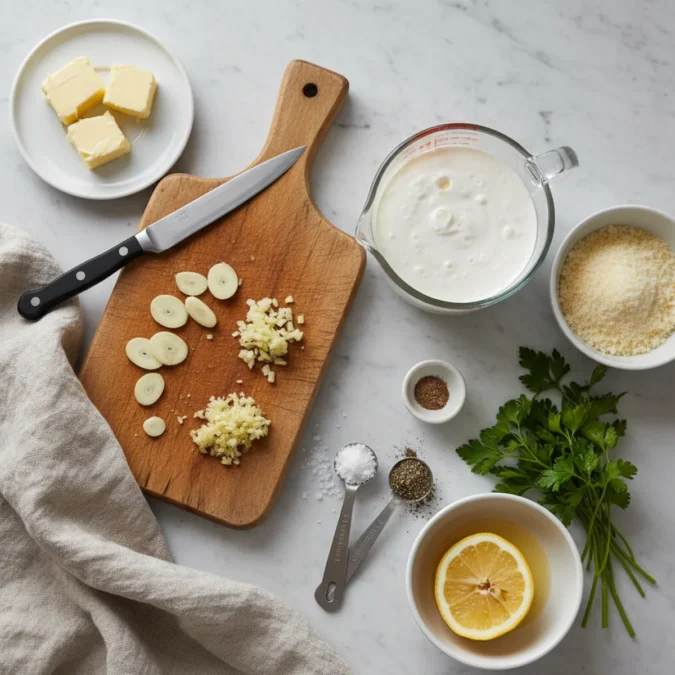
Use fresh garlic, not the jarred pre-minced stuff. The flavor difference is real, and since garlic is the star here, it matters. Slice it thin for a mellow sweetness or mince it for sharper punch — both work, just don’t let it brown past pale gold.
Heavy whipping cream is non-negotiable for the classic version. Half-and-half works but the sauce will be thinner and may need a cornstarch slurry (1 tsp cornstarch + 1 tsp cold water) to hold together. Don’t use milk alone — it’ll split.
For cheese, freshly grated Parmesan melts way better than the pre-shredded kind, which has anti-caking agents that make it grainy. Pecorino Romano is a great swap if you want more bite. A pinch of nutmeg sounds weird but adds that restaurant-quality warmth — try it once and you’ll keep doing it.
Ingredient Swaps & Dietary Options
Gluten-free: This sauce is naturally gluten-free since there’s no flour. Just make sure whatever you serve it with is GF too.
Lighter version: Swap heavy cream for half-and-half and use 2 tbsp butter instead of 4. Add the cornstarch slurry mentioned above if it looks thin. You’ll lose some richness but save about 60 calories per serving.
Dairy-free/vegan: Use vegan butter, full-fat canned coconut cream (the thick part), and nutritional yeast instead of Parmesan. Add a tablespoon of lemon juice to mimic the tang. It won’t taste identical, but it’s genuinely good.
Keto-friendly: You’re already basically there. Heavy cream, butter, and cheese are all keto-friendly. Serve over zucchini noodles or steak instead of pasta.
Tips for Perfect Sauce Every Time
Grate your own cheese. I know I’m repeating myself, but pre-shredded Parm is the number one reason this sauce turns out grainy. It takes 30 seconds with a microplane.
Don’t walk away from the garlic. It goes from golden to burnt in about 15 seconds. Keep the heat at medium-low and stir. If it starts browning too fast, pull the pan off the heat for a few seconds before adding the cream.
Add cheese off the heat. Dumping Parm into a boiling pan makes it clump. Take the pan off the burner, let it cool for 20 seconds, then whisk in the cheese gradually. The residual heat melts it perfectly.
Save pasta water. If you’re tossing this with noodles, a splash of starchy cooking water loosens everything up and helps the sauce cling. It’s the difference between sauce that coats and sauce that pools at the bottom.
Serving Ideas & Storage
This sauce is a workhorse. Toss it with fettuccine or linguine for a quick pasta dinner, spoon it over pan-seared chicken breasts, or use it as a dipping sauce for garlic bread and pizza crusts. It’s also excellent over steamed broccoli or roasted cauliflower if you want to pretend you’re being healthy.
For storage, cool the sauce completely and refrigerate in an airtight container for up to 4 days. It will thicken considerably — that’s normal. Reheat gently over low heat with a splash of milk or cream, stirring constantly. Microwaving works but do it in 20-second bursts and stir between each.
Freezing isn’t ideal because cream sauces can separate, but if you must, freeze for up to 2 months and reheat very gently with extra liquid while whisking constantly. Honestly, it’s better fresh — this recipe is small enough to use in one meal.
Garlic Cream Sauce
Ingredients
Equipment
Method
- Melt the butter in a medium saucepan over medium-low heat. Add the garlic and cook gently, stirring frequently, until fragrant and pale gold — about 1 to 2 minutes. Do not let it brown.
- Pour in the heavy cream and increase heat to medium. Bring to a gentle simmer (not a boil) and cook, stirring occasionally, until the cream reduces by about a third and coats the back of a spoon — 4 to 6 minutes.
- Remove the pan from the heat. Let it cool for about 20 seconds, then whisk in the Parmesan a handful at a time until fully melted and smooth.
- Stir in the salt, pepper, nutmeg, and lemon juice. Taste and adjust seasoning — you may want another pinch of salt depending on how salty your Parmesan is.
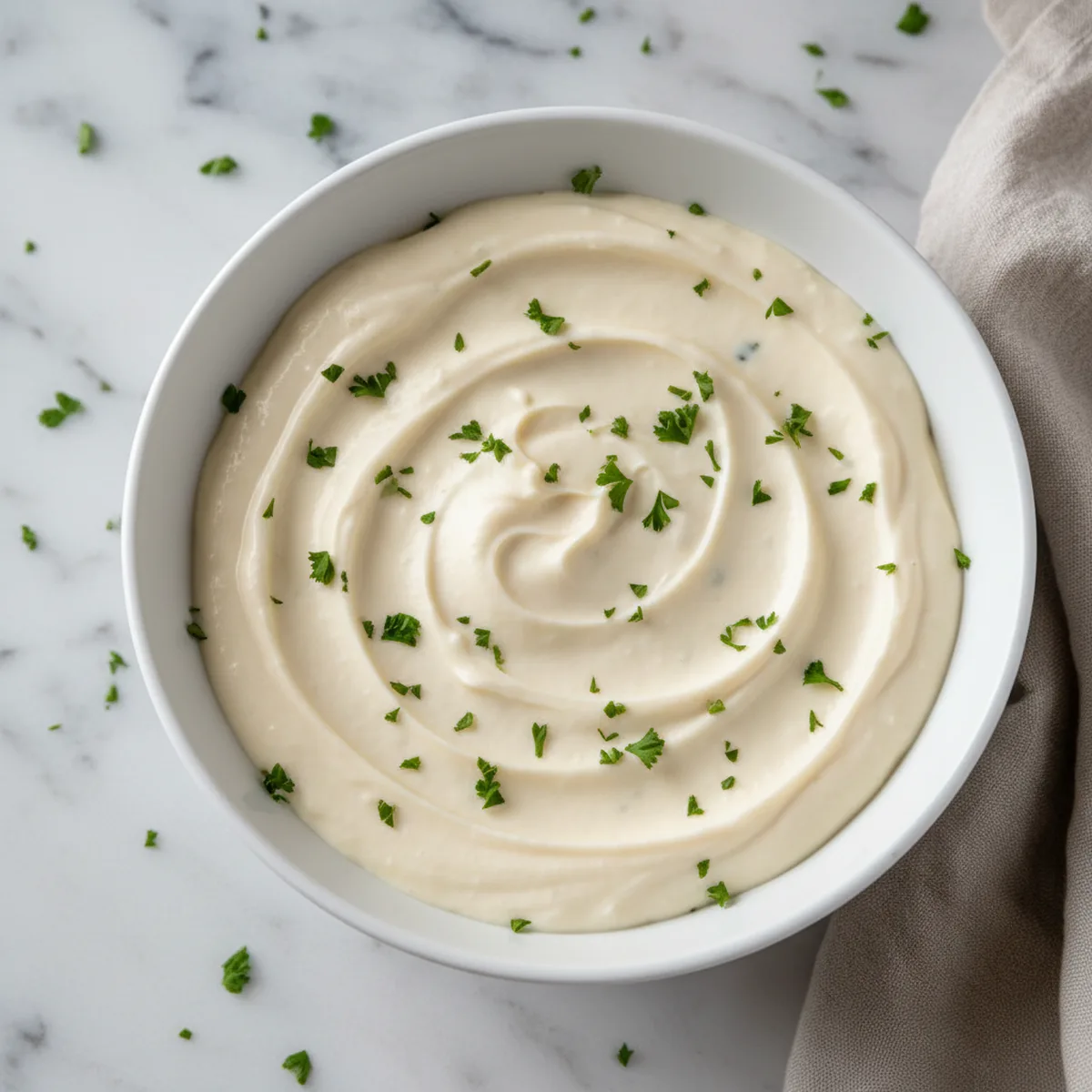
- If the sauce is too thick, whisk in a splash of pasta water or milk until it reaches your desired consistency. Garnish with parsley and serve immediately.
Notes
Frequently Asked Questions
Can I make garlic cream sauce without heavy cream?
You can substitute half-and-half, but the sauce will be thinner and may need a cornstarch slurry (1 tsp cornstarch mixed with 1 tsp cold water, stirred in at the end) to thicken. Milk alone won’t work well — it’s too low in fat and tends to split. Coconut cream is your best dairy-free option.
Why did my garlic cream sauce turn out grainy?
Almost always the Parmesan. Pre-shredded cheese has anti-caking agents that prevent it from melting smoothly. Grate your own from a block and add it off the heat — if the pan is too hot when you add the cheese, the proteins seize up and get clumpy.
How do I thicken garlic cream sauce?
The easiest way is to let it reduce longer on the stove — simmering evaporates water and naturally thickens things. If that’s not enough, a small cornstarch slurry (1 tsp cornstarch + 1 tsp cold water) whisked in at the end does the trick. Adding more cheese also thickens it, but go easy or it gets too salty.
Can I make this ahead of time?
You can, but cream sauces are always best fresh. If you need to prep ahead, make it up to a day in advance and store in the fridge. Reheat very gently over low heat with a splash of milk, stirring constantly. Don’t microwave on high — it’ll break.
What can I serve with garlic cream sauce besides pasta?
It’s great over pan-seared chicken, shrimp, or salmon. Try it on steak, drizzled over roasted vegetables, as a pizza base, or just dunk crusty bread in it. Basically anything that isn’t dessert.
Leave a Reply