
This birria sauce recipe gives you that deep, brick-red, chile-rich consommé that makes birria tacos so addictive — the kind you dunk into until your fingers are stained red and you don’t even care.
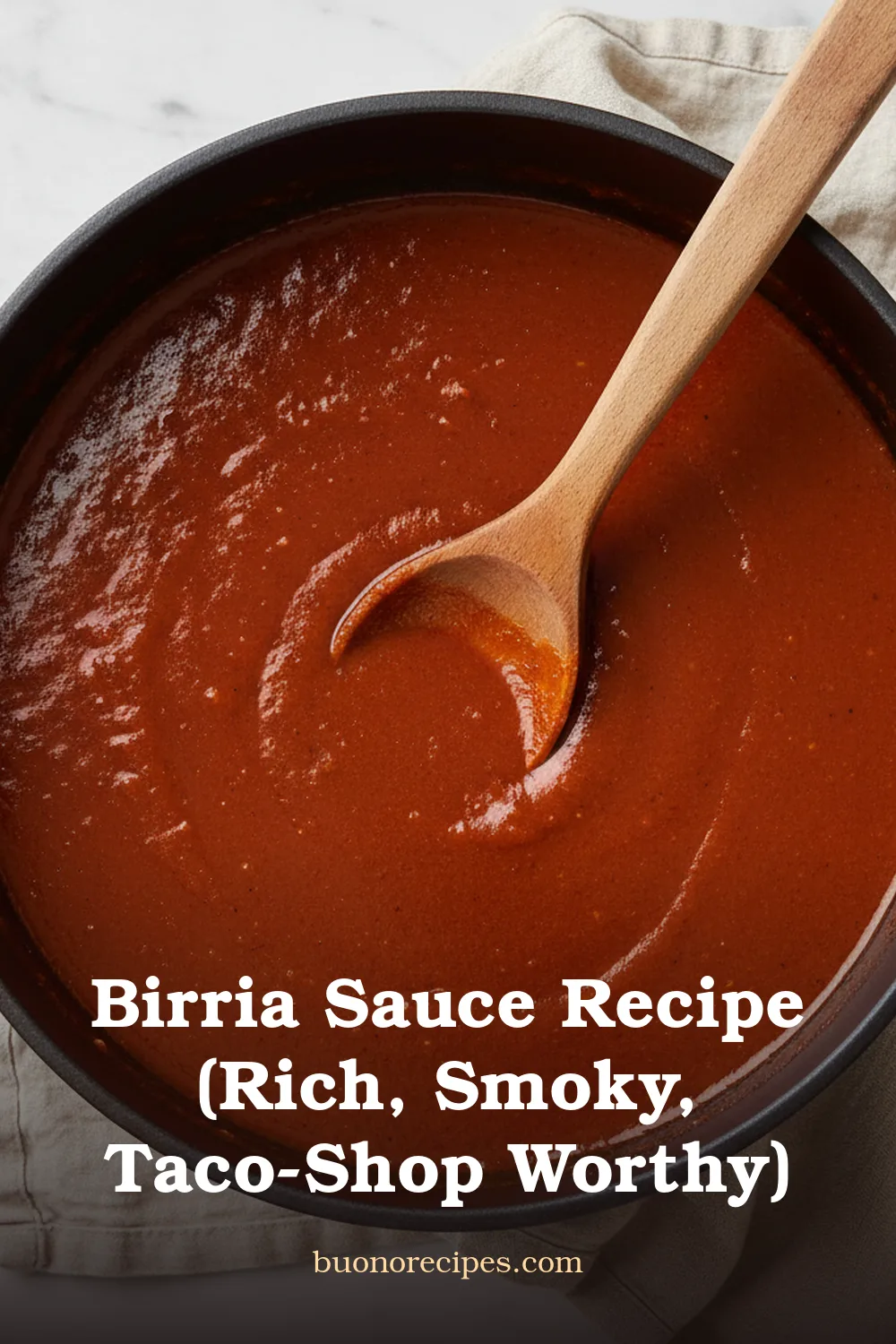
It’s built from dried guajillo and ancho chiles, toasted spices, and a slow-simmered broth that tastes like it came from a taco truck window. The magic is in the layering: toast the chiles, bloom the spices, blend it all smooth, then let it simmer low until everything mellows into something velvety and complex.
I’ve tweaked this one a bunch — the first time I made it, I skipped toasting the chiles and the sauce tasted flat and dusty. That one step changes everything. Once you nail it, you’ll want a jar of this stuff in your fridge at all times.
What Is Birria Sauce?
Birria sauce — often called consommé — is the braising liquid and dipping sauce that comes from making birria, a traditional Mexican stew originating in Jalisco. It’s typically made with dried chiles, aromatics, spices, and whatever meat you’re braising (goat, beef, or lamb are all classic).
When people talk about “birria sauce” in the context of quesabirria tacos, they’re usually referring to the concentrated, chile-forward liquid that gets spooned into the tortilla, used for dipping, and sometimes brushed onto the tortilla itself for that signature red crust. It’s smoky, slightly tangy, gently spiced, and deeply savory.
This recipe focuses on the sauce itself — the chile base and seasoned broth — so you can use it with whatever protein you like, or even just as a dip and a drizzle.
Why This Birria Sauce Recipe Works
The key is treating the chiles properly. Dried guajillo chiles bring a bright, tangy fruitiness and that classic red color, while ancho chiles add deeper, raisin-y sweetness and body. Toasting them briefly in a dry pan wakes up oils that would otherwise stay dormant — skip this and your sauce will taste like dusty paper.
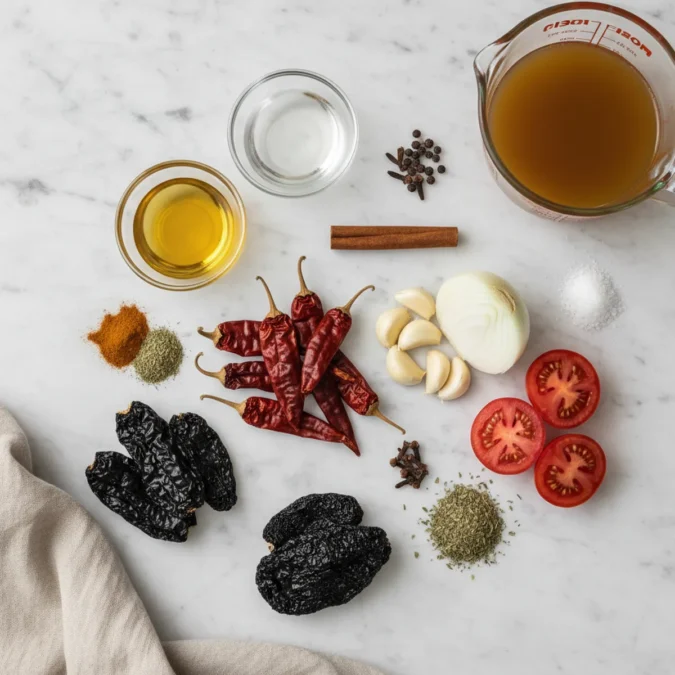
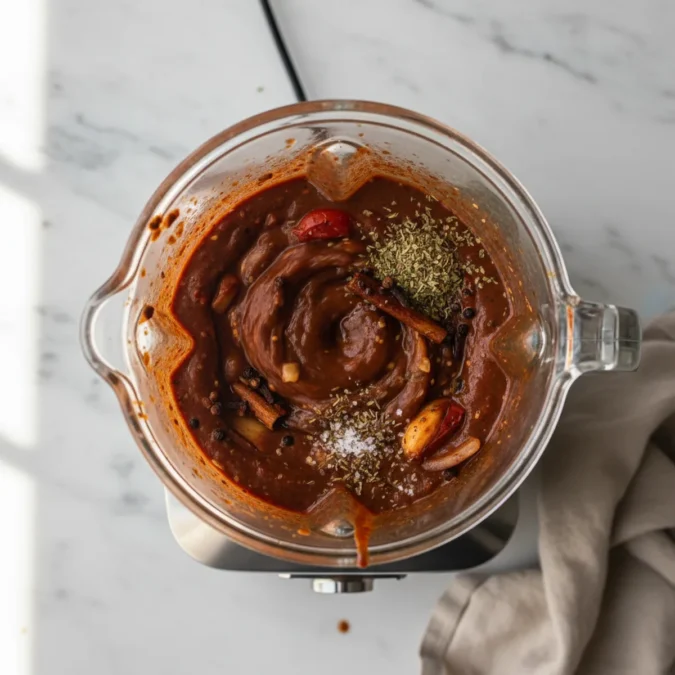
Blending the rehydrated chiles with aromatics (onion, garlic, tomatoes, vinegar) creates a smooth, concentrated paste that forms the flavor backbone. Simmering it into broth lets the flavors marry and mellows the raw edge of the chiles and garlic. A cinnamon stick and cloves add warmth without making it taste like dessert — just a subtle background hum.
The result is a sauce that’s rich enough to stand on its own as a dip, but balanced enough not to overpower the meat.
Ingredient Notes
Guajillo chiles: medium heat, tangy, bright red. These are non-negotiable for authentic color and flavor. Find them in the Hispanic aisle of most grocery stores or any Latin market.
Ancho chiles: dried poblanos, dark and slightly sweet. They add depth and thicken the sauce naturally. If you can’t find them, use more guajillo plus a teaspoon of smoked paprika.
Apple cider vinegar: adds the tang that makes birria sauce so dunkable. White vinegar works too, but cider vinegar is softer and rounder.
Cinnamon stick and whole cloves: these are traditional and they matter. Ground versions work in a pinch (use ¼ tsp cinnamon, a pinch of cloves), but whole spices infuse more gently.
Beef broth: the base liquid. Use low-sodium so you can control the salt. If you’re making this to go with actual birria meat, you’ll eventually use the meat’s braising liquid instead — but this standalone version uses broth.
Ingredient Swaps & Dietary Options
Gluten-free: this birria sauce recipe is naturally gluten-free as written. Just double-check your broth label.
Vegan: swap the beef broth for vegetable broth or mushroom broth. The chiles carry so much flavor that you won’t miss the meat. Use this as a sauce for jackfruit or mushroom tacos.
Keto-friendly: the chiles and tomatoes have some carbs, but the per-serving amount is low enough that this fits most keto plans. Skip any added sugar (there isn’t much here anyway) and you’re good.
Heat level: for a spicier sauce, add 1-2 chiles de árbol when toasting the guajillo and ancho. For milder, remove the seeds and veins from all the chiles before soaking.
Tips for the Best Birria Sauce
Don’t burn the chiles when toasting — 15-20 seconds per side is plenty. Burned chiles taste bitter, and no amount of simmering fixes that. If they start smoking, you’ve gone too far.
Soak the chiles in hot (not boiling) water for about 15 minutes until they’re soft and pliable. Save the soaking liquid — it’s full of flavor and goes right into the blender.
Blend the chile mixture thoroughly, then strain it through a fine-mesh sieve back into the pot. This removes any tough bits of chile skin and gives you that silky, restaurant-quality texture. It’s an extra step, but it’s the difference between good and great.
Taste and adjust salt at the end. The sauce should taste bold — slightly salty on its own because it’s a condiment and a dip, not a standalone soup.
Serving Ideas
The obvious move: quesabirria tacos. Brush this sauce onto corn tortillas, fill with shredded beef and cheese, griddle until crispy, and serve with extra sauce on the side for dipping.
Beyond tacos, use it as a base for birria ramen (yes, that’s a thing and it’s incredible), spoon it over rice, or use it as a braising liquid for short ribs or chuck roast. It also makes a fantastic dip for crusty bread or a drizzle over loaded nachos.
If you’re not using it with meat, try it over eggs, stirred into soup, or even as a pizza base for a Mexican-inspired pie. Once you have a jar of this, you’ll find excuses.
Storage & Freezing
Cool the sauce completely, then store in an airtight container in the fridge for up to 5 days. The flavor actually improves after a day — the chile flavor deepens and mellows.
To freeze, portion into freezer-safe containers or ice cube trays (great for small amounts). Freeze for up to 3 months. Thaw overnight in the fridge or gently reheat on the stove.
Reheat on the stovetop over medium-low heat, stirring occasionally. Add a splash of broth if it’s thickened too much. Microwave works too — just cover it unless you want your microwave painted red.
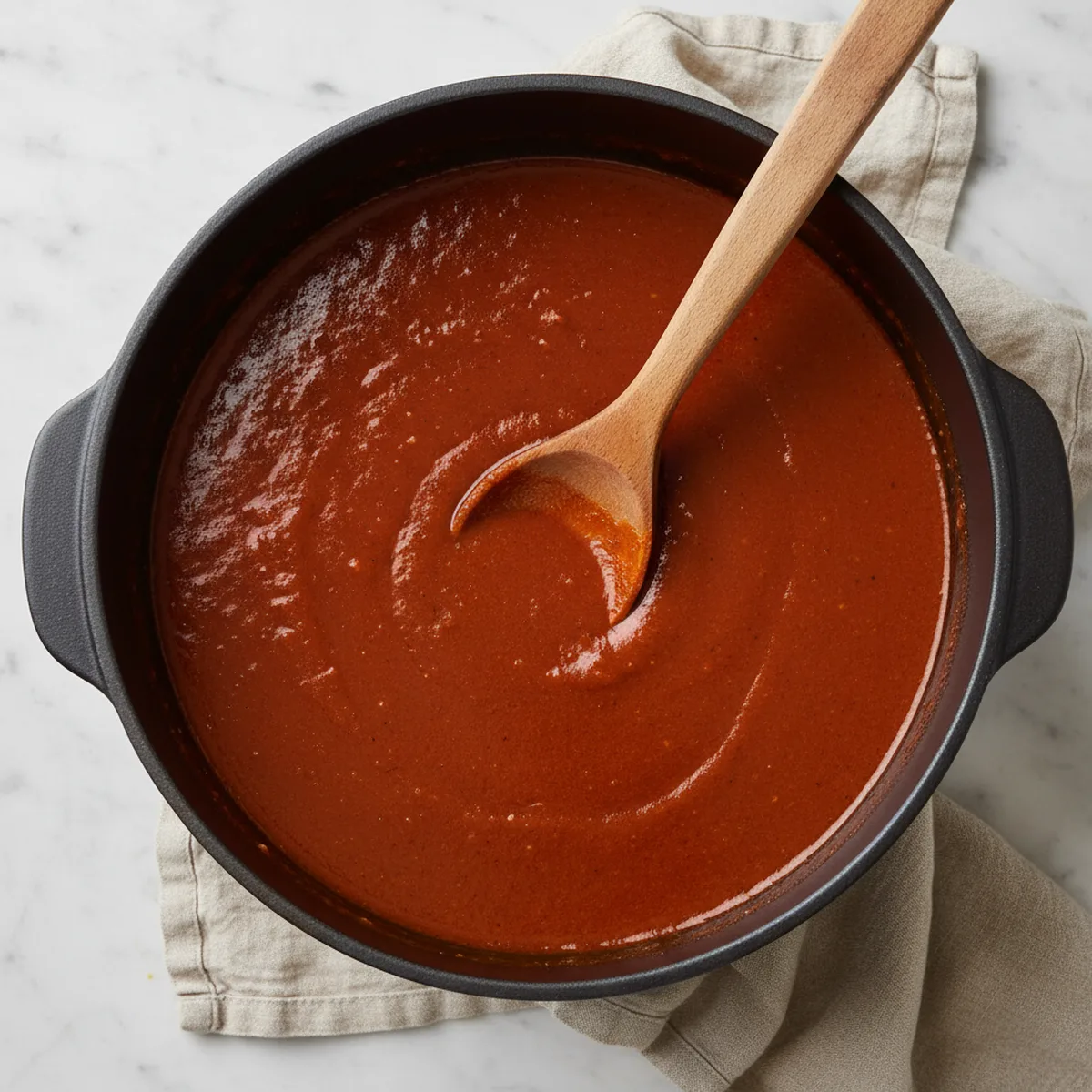
Homemade Birria Sauce (Consommé)
Ingredients
Equipment
Method
- Heat a dry skillet over medium-high heat. Toast the guajillo and ancho chiles for 15-20 seconds per side until fragrant and slightly darkened — do not let them burn. Transfer to a bowl.
- Pour hot (not boiling) water over the chiles to cover. Let soak for 15 minutes until soft and pliable.
- In the same skillet, add the vegetable oil. Sear the onion quarters, garlic cloves, and tomato halves cut-side down for 3-4 minutes until charred in spots. Remove from heat.
- Drain the chiles, reserving 1 cup of the soaking liquid. Add the chiles to a blender along with the charred onion, garlic, tomatoes, cinnamon stick, cloves, oregano, cumin, peppercorns, apple cider vinegar, salt, and the reserved soaking liquid.
- Blend on high for 2-3 minutes until completely smooth.
- Pour the blended mixture through a fine-mesh sieve into a medium pot or Dutch oven, using a spatula to press through as much as possible. Discard the solids left in the sieve.
- Add the beef broth to the pot and stir to combine. Bring to a gentle boil over medium heat, then reduce to low and simmer uncovered for 20-25 minutes, stirring occasionally, until slightly thickened and rich in color.
- Taste and adjust salt as needed. The sauce should be bold and slightly salty since it's used as a dip and condiment. Use immediately or cool and store.
Notes
Frequently Asked Questions
Can I make birria sauce without dried chiles?
Not really — dried guajillo and ancho chiles are the foundation of the flavor and color. Chili powder or fresh chiles won’t give you the same depth. If your store doesn’t carry them, order online or check a Latin market. They keep for months in a sealed bag.
How spicy is this birria sauce recipe?
With seeds removed, it’s mildly spicy — more smoky and tangy than hot. Guajillo chiles are fairly mild (2,500-5,000 Scoville). If you want more kick, add 1-2 chiles de árbol. If you want it milder, make sure you remove all seeds and veins from the chiles.
Can I use this sauce to make actual birria?
Yes. Use it as the braising liquid for beef chuck roast or short ribs. Add 2 extra cups of broth, sear your meat first, then braise in this sauce for 3-4 hours until the meat shreds. The leftover liquid becomes your dipping consommé.
Why do I need to strain the sauce?
Dried chile skins never blend completely smooth, no matter how powerful your blender is. Straining through a fine-mesh sieve removes those tough bits and gives you that silky, restaurant-style texture. It’s worth the extra two minutes.
Can I make birria sauce ahead of time?
Absolutely — it’s actually better the next day. The chile flavor mellows and deepens as it sits. Make it up to 5 days ahead and keep it in the fridge, or freeze it in portions for up to 3 months.
Leave a Reply